Geriatric Medicine in the Digital Age
How Technology Is Transforming Independence and Personalized Care for Older Adults

Geriatric care is undergoing a profound transformation driven by the rapid growth of the global elderly population and the rise of digital technologies. Today, innovations in artificial intelligence, robotics and new care models aim to achieve three essential goals: strengthening independence, improving quality of life and delivering highly specialized, efficient care for older adults.
Technology has shifted the approach to aging from reactive treatment to proactive monitoring, early intervention and supportive care delivered directly in the home environment. This marks a new era where older adults can live longer, healthier and more autonomous lives.
Technological Advances in Senior Care
Remote healthcare services and real-time monitoring systems now allow older adults to avoid unnecessary travel to clinics. Wearable health devices and in-home sensor networks continuously track vital signs such as blood pressure and heart rate, along with behavioral patterns. These systems use predictive artificial intelligence to detect early warning signs of medical problems, including fall risk or sudden deterioration, and send immediate alerts to caregivers or medical teams.
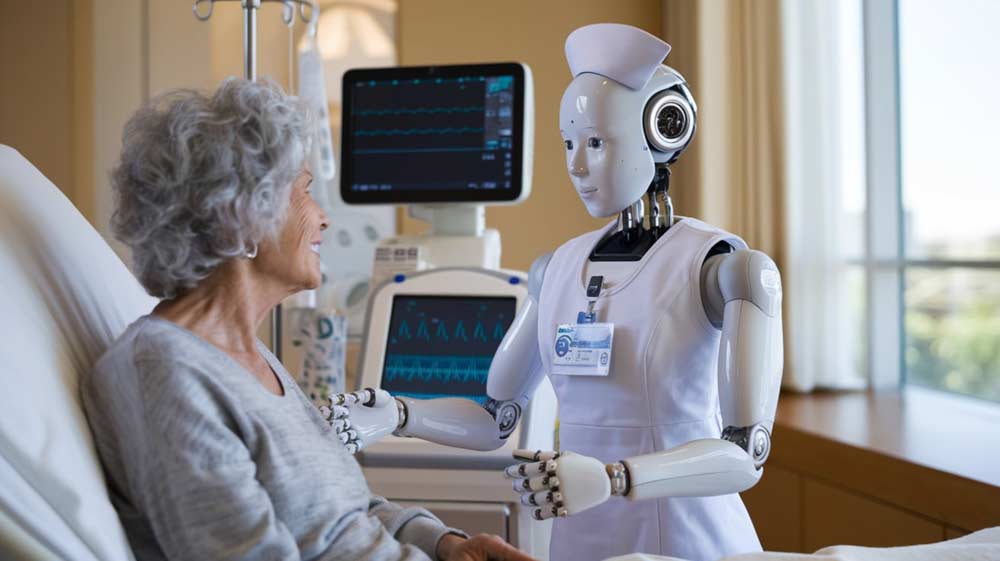
Smart home technologies, including voice assistants and automated lighting systems, further enhance independence. Even more importantly, fall-detection sensors and personal emergency response systems provide essential safety for seniors who prefer to remain in their homes. Robotics is also moving from hospitals into home care. Social companion robots help combat loneliness and isolation by offering interaction, reminders and emotional support. Assistive technologies, such as exoskeletons and mobility-support robots, are being developed to help seniors perform physically demanding tasks or move safely, reducing caregiver burden and enabling aging in place.
Artificial Intelligence and Personalized Medicine
Artificial intelligence and machine learning are redefining clinical decision-making in geriatric medicine. These tools improve diagnostic accuracy and risk assessment by analyzing large volumes of medical data to recognize subtle patterns that may indicate critical conditions at their earliest stages, including very early Alzheimer’s disease. AI tools can predict the likelihood of common geriatric syndromes such as frailty and medication-related complications, including polypharmacy. This gives physicians powerful insights for proactive care planning and tailored interventions. In medication management, AI-supported systems can compare multiple prescriptions and instantly detect harmful drug interactions, a major risk among older adults. These systems can also recommend optimal dosages based on a patient’s kidney and liver function or other individualized health parameters. This significantly reduces medication errors and enhances both safety and treatment effectiveness.
AI is also helping to create highly personalized care plans. Using machine learning models, healthcare teams can design dynamic, evolving care strategies that adapt to the patient’s changing needs. These plans can include very specific dietary recommendations, customized physical therapy programs for strength and balance or targeted cognitive training activities. Each intervention is crafted to support functional ability, preserve independence and improve overall wellbeing.
Innovative Care Models for an Aging Population
The evolution of senior care extends beyond technology. It also includes groundbreaking changes in care delivery models built around integration, continuity and holistic support. New systems prioritize addressing the complex, multidimensional needs of older adults, moving away from fragmented care toward coordinated, patient-centered services.
Integrated care models have become essential. They create structured coordination between the many healthcare professionals involved in a senior’s wellbeing, including geriatricians, specialists, psychologists, social workers and rehabilitation therapists. By aligning services, these models help manage chronic diseases more effectively, reduce avoidable hospital readmissions and improve health outcomes across the continuum of care.
Modern rehabilitation and stimulation techniques also play a key role. Virtual reality is being used increasingly for therapeutic and preventive purposes. Immersive VR programs provide cognitive training to support memory and attention, and remote physical rehabilitation sessions help improve strength, mobility and balance for seniors who have difficulty accessing in-person therapy. These technologies make rehabilitation more engaging, personalized and accessible within the home. Equally important are innovations that support primary caregivers, whether family members or professional caregivers. Digital platforms and AI-powered tools are now available to simplify administrative tasks such as appointment scheduling and medication tracking. They also offer educational resources that strengthen caregivers’ skills and reduce the risk of burnout and emotional fatigue. Supporting caregivers ultimately ensures better continuity and quality of care for older adults.
Empowering Seniors Through Smart, Personalized and Connected Care
The digital era is reshaping geriatric medicine with unprecedented speed. Technology, automation and integrated care models are creating a future in which seniors can remain independent, safe and socially connected while receiving highly personalized medical support.
With continued innovation in artificial intelligence, robotics, virtual care and predictive analytics, aging is being redefined. Older adults are gaining more control over their health, caregivers are receiving better support and healthcare systems are becoming more efficient and responsive. This new vision of geriatric care does more than extend life. It elevates the experience of aging, ensuring that independence, dignity and wellbeing remain at the center of every stage of care.