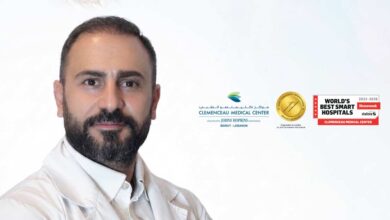
Ziad Abdulhak, MD
Executive Director/ International Business Development at BCH Alliance & Global Services
Expanding Pediatric Excellence Across Borders

As global healthcare increasingly relies on cross-border collaboration, leading institutions are expanding their international partnerships to improve access to specialized care and share medical expertise worldwide. In this context, Boston Children’s Hospital, one of the world’s most renowned pediatric centers, continues to strengthen its global engagement. Recently appointed Executive Director of International Business Development at BCH Alliance & Global Services, Ziad Abdulhak is leading efforts to expand the hospital’s international partnerships and support the development of pediatric care systems globally. In this interview with Hospitals Magazine, he shares his vision for building sustainable collaborations that advance pediatric healthcare across borders.
Congratulations on your recent appointment. What strategic mandate have you been entrusted with in your new role as Executive Director of International Health Services?
My mandate is to expand Boston Children’s Hospital’s global impact by building meaningful international partnerships that elevate pediatric care worldwide. That includes facilitating access for international patients to our most advanced specialties and working with health systems abroad to strengthen their pediatric capabilities. Ultimately, the goal is to move from episodic care to enduring collaboration, where expertise, innovation, and knowledge flow across borders.
How do you define the core mission of International Health Services at Boston Children’s Hospital today?
Our mission is simple but powerful: to ensure that geography does not limit a child’s access to world-class pediatric expertise. Global Services connects patients, physicians, and institutions worldwide with the clinical excellence and scientific leadership of Boston Children’s Hospital. At its best, this work transforms individual patient journeys and strengthens pediatric systems globally.
What are your top three priorities during your first phase in this position?
First, deepening relationships with our current international partners to ensure our collaborations create lasting clinical and educational impact.
Second, expanding strategic partnerships in regions that are making bold investments in pediatric healthcare.
Third, modernizing the international patient experience through stronger care coordination and seamless continuity of care across borders.
How does your previous experience shape your approach to leading international healthcare operations?
International healthcare is as much about relationships as it is about strategy. My experience has taught me that the most successful partnerships are built on trust, cultural understanding, and a shared commitment to excellence. When institutions align around a common mission to improve outcomes for children, the collaboration becomes far more powerful than any single organization working alone.
Boston Children’s Hospital consistently ranks among the world’s top pediatric institutions. What are the key pillars behind this sustained global leadership?
The hospital’s leadership rests on three pillars: exceptional clinical care, groundbreaking research, and a deep commitment to training the next generation of pediatric specialists. At Boston Children’s Hospital, these elements are not separate; they reinforce one another. Discoveries in the laboratory translate into clinical breakthroughs, and those innovations shape how pediatric medicine is practiced around the world.
How does the hospital integrate clinical care, research, and education into one cohesive ecosystem?
Many of our physicians are also scientists and educators. This creates a dynamic environment in which clinical questions inspire research and research discoveries quickly inform patient care. The result is an ecosystem where children benefit directly from the most advanced thinking in pediatric medicine while young physicians are trained at the forefront of innovation.
Pediatric medicine is uniquely complex. What are the biggest operational challenges in delivering world-class pediatric care at scale?
Pediatric medicine deals with conditions that are often rare, highly specialized, and deeply interconnected across multiple disciplines. Delivering exceptional care requires coordinating large multidisciplinary teams while also maintaining a family-centered approach that supports both the child and their caregivers. Scaling that level of precision and compassion simultaneously is one of the defining challenges of pediatric healthcare.
What is your long-term vision for expanding Boston Children’s Hospital’s international footprint?
The long-term vision is to build a global network of trusted partners dedicated to advancing pediatric care. Rather than simply exporting expertise, we aim to collaborate in ways that strengthen local healthcare systems—through physician training, clinical collaboration, research partnerships, and strategic advisory work. When done well, these partnerships create lasting capacity and elevate pediatric care far beyond our own institution.
Which regions represent the strongest growth opportunities for international collaboration?
Regions that are investing heavily in healthcare transformation naturally create strong opportunities for collaboration. The Middle East and emerging health systems in Latin America are demonstrating ambitious commitments to building advanced pediatric capabilities. These regions are not only expanding infrastructure but also prioritizing specialized expertise, which makes meaningful partnerships possible.
When evaluating international partnerships, what standards or criteria are non-negotiable?
Alignment of values is the foundation. Any partnership must demonstrate a deep commitment to patient safety, clinical quality, and ethical healthcare delivery. We also look for partners who are committed to long-term collaboration rather than short-term transactional relationships.
How important is physician training and knowledge transfer in your global engagement model?
It is central to everything we do. The most effective way to improve pediatric outcomes globally is by investing in people, physicians, nurses, and healthcare leaders. Training programs, fellowships, and collaborative education ensure that expertise continues to grow within local healthcare systems long after the partnership begins
How do you ensure that partnerships go beyond patient referrals and create sustainable system-level impact?
We approach partnerships holistically. That means working with institutions on clinical program development, physician education, multidisciplinary case collaboration, and operational strategy. The objective is not dependence but capability, helping partners build the expertise and systems necessary to care for children within their own communities.
How is digital transformation reshaping international patient services and cross-border care?
Digital platforms are redefining how global healthcare is delivered. They allow physicians to collaborate across continents, enable patients to access expert consultations before traveling, and support follow-up care once they return home. Digital transformation is making cross-border pediatric care more coordinated, more efficient, and ultimately more patient-centered.
What role does telehealth now play in pediatric subspecialty consultations?
Telehealth has become an essential bridge between specialists and patients worldwide. It allows us to provide second opinions, multidisciplinary case reviews, and follow-up consultations without geographic barriers. For many families, it means access to world-class expertise without the burden of travel.
Artificial intelligence is rapidly evolving in healthcare. Where do you see its greatest impact in pediatric medicine?
Artificial intelligence will likely have its greatest impact in areas such as early diagnosis, imaging analysis, and predictive care. In pediatrics, where early intervention can dramatically change a child’s life trajectory, these tools can help clinicians detect conditions sooner and personalize treatment strategies with greater precision.
How do you maintain continuity of care for international patients after they return home?
Continuity of care is a critical priority. We work closely with physicians in patients’ home countries to ensure treatment plans are clearly communicated and follow-up care is coordinated. Telehealth consultations and ongoing physician-to-physician collaboration help maintain a seamless care journey even after families leave Boston
The Middle East has become a major hub for healthcare investment. How do you view collaboration opportunities with institutions in this region?
The Middle East has demonstrated remarkable ambition in developing advanced healthcare systems. Many institutions in the region are building centers of excellence and investing in specialized pediatric services. These initiatives create exciting opportunities for collaboration in clinical programs, physician education, and healthcare system development.
What are the most critical gaps you observe in pediatric healthcare systems across emerging markets?
One of the most significant gaps is access to highly specialized pediatric subspecialties. Workforce development and advanced training opportunities are also areas where additional investment can make a transformative difference. Strengthening these areas can significantly improve outcomes for children.
International healthcare leadership requires cultural sensitivity and strategic discipline. How do you balance both?
Effective global collaboration requires humility and listening. Every healthcare system operates within its own cultural and regulatory environment. Understanding those dynamics is essential. At the same time, maintaining clear standards for clinical quality and patient safety ensures that partnerships deliver meaningful and measurable results
Looking ahead, what would you like Boston Children’s Hospital’s global presence to represent under your leadership?
I would like the global presence of Boston Children’s Hospital to represent partnership, innovation, and a shared commitment to improving the lives of children everywhere. If our work helps strengthen pediatric care systems around the world while advancing the science of child health, then we will have truly fulfilled our mission.