Baylor St. Luke’s Medical Center and St. Luke’s Health–The Woodlands Hospital, members of CommonSpirit Health
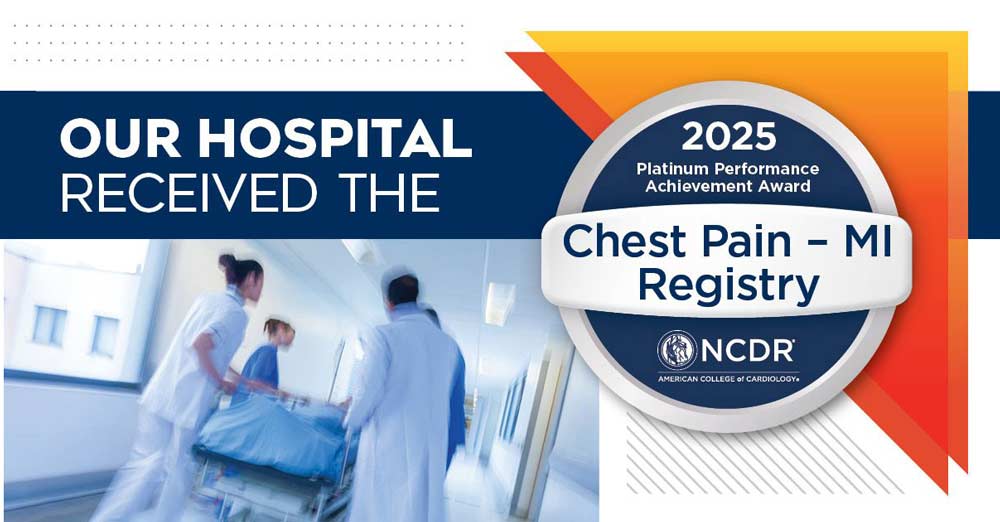
Received the 2025 Chest Pain–MI Registry Performance Achievement Award from NCDR
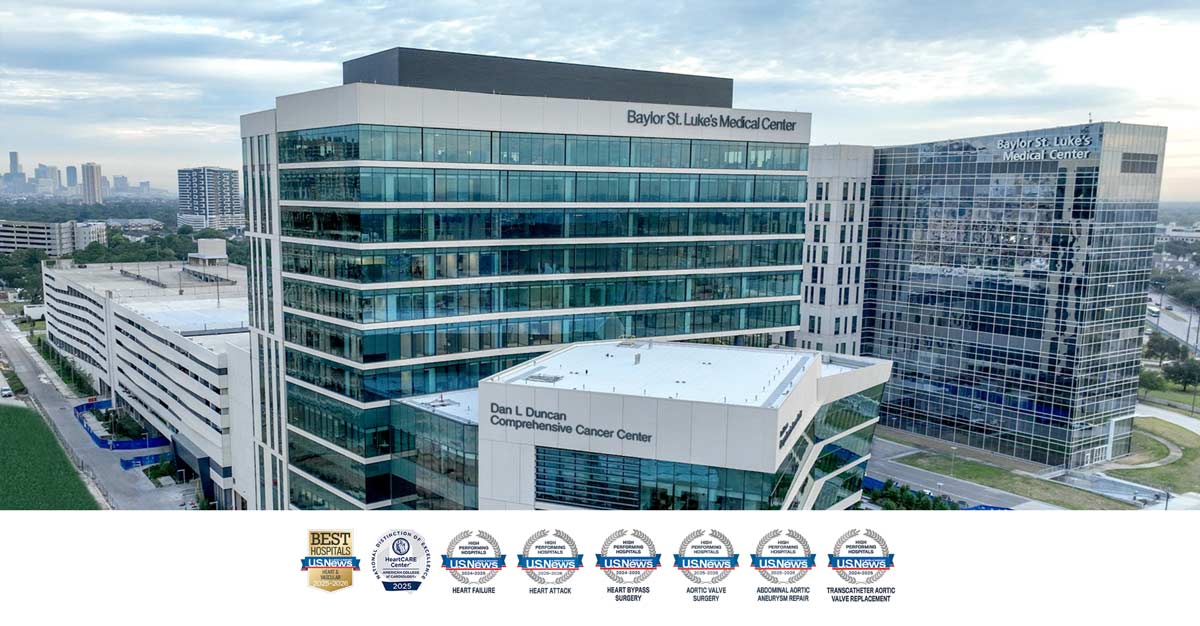
When it comes to your heart, you deserve the best care. That’s why we’re proud to share that Baylor St. Luke’s Medical Center and St. Luke’s Health-The Woodlands Hospital have been recognized with the 2025 Chest Pain – MI Registry Performance Achievement Award from the National Cardiovascular Data Registry (NCDR).
This award recognizes healthcare organizations that demonstrate sustained, top-level performance in the quality of care for heart attack patients. A part of the American College of Cardiology, NCDR is the largest, most comprehensive, outcomes-based cardiovascular patient data repository in the United States.
This means you can trust us to provide the highest quality, data-driven treatment. Learn more about our cardiac services and how we’re dedicated to your heart health:
Why choose Baylor St. Luke’s Medical Center for Heart Care?
Our network of cardiologists specializes in heart care, offering a comprehensive range of treatments close to home. They’re committed to helping keep your heart strong and healthy with expert care, confidence and support.
Leaders in heart care
Baylor St. Luke’s Medical Center ranks among the top hospitals in the nation for cardiology, heart and vascular surgery. We have led the field in heart care for decades. In 1968, our team performed the first-ever successful heart transplant in the United States, and we later implanted the first total artificial heart. As one of the nation’s top academic institutions, we are dedicated to innovation and research. Clinical trials conducted at Baylor St. Luke’s Medical Center guide the future of heart care.
Renowned expertise in cardiology and cardiac surgery
The expert physicians in our Heart Care Center provide exemplary care to patients across the heart failure spectrum. Our team has the knowledge and expertise to address any condition at any level of complexity.
Heart-related services we offer
1. Leading-edge Heart Surgery
We have the expertise to treat routine to high-risk heart cases with exceptional outcomes. For every heart surgery, you can trust you’re in expert hands. Baylor St. Luke’s Medical Center is home to some of the nation’s most acclaimed heart specialists, caring for patients with the most complex and critical conditions.
We are home to the Texas Heart Institute® Center for Cardiovascular Care, one of the country’s leading heart surgery centers, according to U.S. News & World Report. In collaboration with Baylor College of Medicine, we offer the latest minimally invasive cardiac surgery and structural heart procedures. People from all over the world receive lifesaving surgery from the team of renowned aortic, cardiovascular and cardiothoracic surgeons at Baylor St. Luke’s Medical Center.
2. Vascular Care for healthy blood flow
Blood vessel health and proper blood flow are critical to your overall well-being. You can trust our vascular specialists to diagnose and treat the full range of vascular conditions.
Vascular diseases affect the blood vessels and blood flow in your body. Through our partnership with Baylor College of Medicine, we provide expert care from specialized vascular doctors. They help ensure your cells, tissues and organs get the healthy blood flow they need to function. Conditions that affect your blood flow are often serious and can be scary for you or a loved one to experience. We support you from diagnosis through treatment. You can rely on our network of vein experts to prioritize your safety and well-being, whether you have a common condition or need complex care.
3. Ventricular assist device (VAD)
A ventricular assist device (VAD) helps pump blood from your heart to the rest of your body. It’s used when your heart is not able to pump enough blood on its own. The device consists of a pump, tubes that connect the pump to the heart, a control system, and a power source. A thin cable connects the pump with the control system. This cable, also called a lead or driveline, comes out of your belly through a small cut in your skin called an exit site.Your doctor may recommend that you get a VAD if:
- You are waiting for a heart transplant.
- Your heart needs long-term help to pump blood.
- Your heart is healing from an injury or illness and it needs help until it can pump on its own.
VADs come in different shapes and sizes. You will receive the type of device that works best for your needs.
4. Heart transplant
A heart transplant is a procedure in which a surgeon removes a diseased heart and replaces it with a donor heart. During a heart transplant, a mechanical pump circulates blood through the body while the surgeon removes the diseased heart and replaces it with a healthy heart from a recently deceased donor.
The surgeon connects the donor heart to the major blood vessels and hooks the heart up to wires that temporarily control the heartbeat. The procedure takes several hours.
To prevent the body from rejecting the donor heart, your surgeon will give you powerful drugs (immunosuppressants) right after surgery. You must continue to take them.
5. Robot-assisted surgery
Robot-assisted surgery uses robotic arms and surgical instruments that are controlled by the doctor. It’s sometimes used in bowel and reproductive organ surgeries.
Not all hospitals have the tools to do robot-assisted surgery or have doctors who are trained to do it. It can lead to fewer problems after surgery. But it can cost more.