“I am convinced: alzheimer’s will be diagnosed in the future primary via biomarkers”
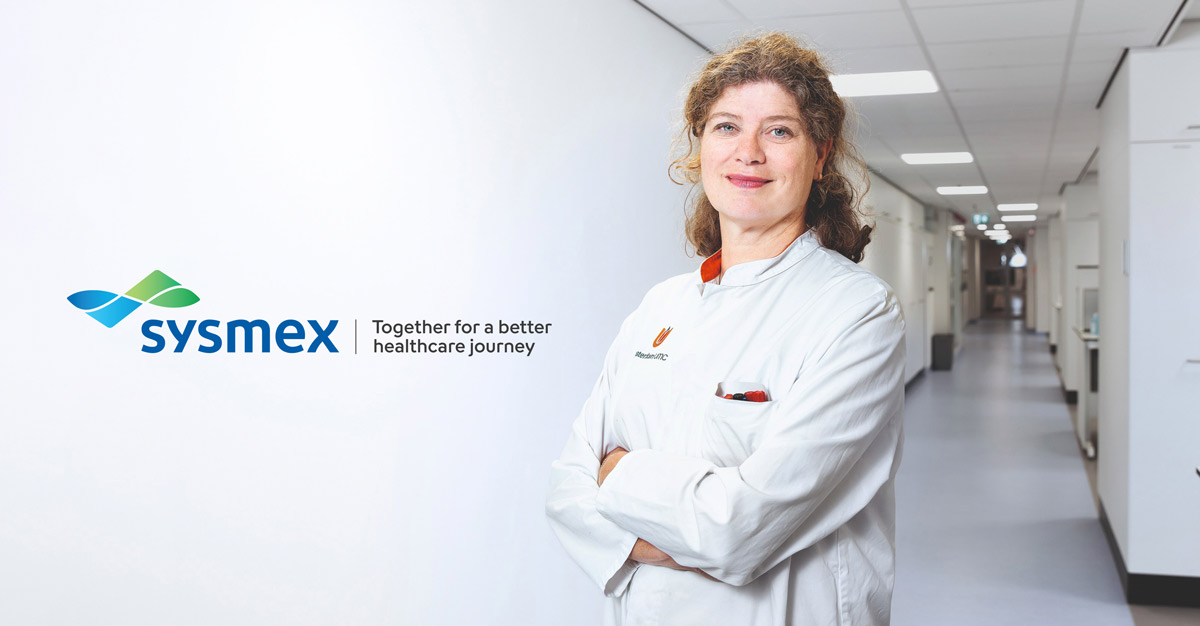
Charlotte Teunissen, Professor of Neurochemistry, is one of the leading international experts in the field of biomarker research in neurodegenerative diseases. Sysmex met the expert at Amsterdam UMC and spoke with her about the importance of blood biomarkers and the future of Alzheimer’s diagnostics.
For Charlotte Teunissen, a day seems to have more than 24 hours: As head of the Neurochemistry Laboratory at Amsterdam UMC, she oversees the development of biomarkers from discovery and validation to clinical application. At the same time, she leads several international networks, including the CSF Society, the Alzheimer Association’s consortium for the global standardization of biomarkers, and the recently founded proteomics consortium Coral.
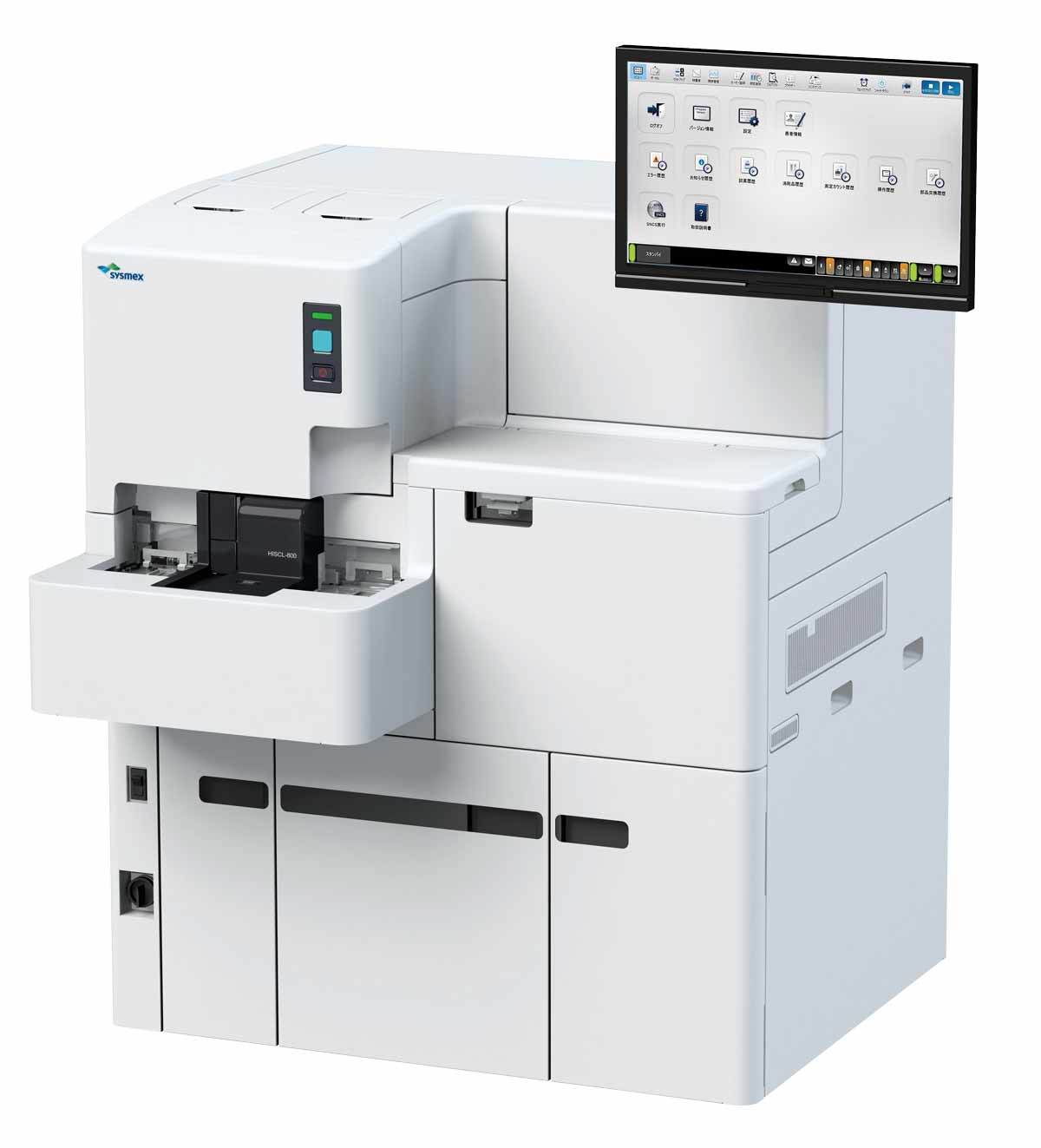
In validating the Alzheimer’s blood biomarkers β-amyloid 42/40 and pTau217, she relies, among other things, on the Sysmex-HISCL system. She discusses her experiences with this system and the progress in Alzheimer’s research in this interview.
“Our goal is to diagnose Alzheimer’s as early as possible”.
Professor Teunissen, what motivates you as a scientist?
Neurology has always fascinated me. I want to understand how the brain works and what happens in diseases of the nervous system. At the same time, it’s important to me to make a difference for society with my research. Translational research particularly excites me, which is why the search for neurological biomarkers is a logical step. My focus is primarily on two diseases: dementia and multiple sclerosis. These diseases affect more and more people worldwide, and the development of targeted diagnostics that actually help those affected is a great motivation for me.
Why does Alzheimer’s disease often go undiagnosed?
There are many reasons for this. One is that the methods needed for Alzheimer’s diagnosis, such as PET scans or cerebrospinal fluid analyses, are not available everywhere. Other forms of dementia are also frequently misdiagnosed, which is partly due to the stigma surrounding the disease and other factors. The lack of affordable and easy-to-perform tests is also a significant factor.
Modern methods can make a crucial contribution here, as they allow for the highly sensitive detection of Alzheimer’s biomarkers in blood plasma. This will enable more targeted diagnostics to be established worldwide, making them accessible to more people. However, since this methodology is still very new, a clear legal framework and binding guidelines are needed first, and these are currently being developed with great urgency. I am confident that the tests will soon be used in specialized clinics worldwide.
Will general practitioners also play a greater role in Alzheimer’s diagnostics with the help of biomarkers?
I can well imagine that, even if this process won’t proceed at the same pace everywhere in the world. In the USA, where modern Alzheimer’s therapies have been approved for considerably longer than in Europe, there is already a strong increase in the use of blood biomarkers in primary care. This is a positive development, as blood diagnostics are well established in primary care and, unlike cerebrospinal fluid diagnostics, do not present a major hurdle.
Nevertheless, important questions remain, such as those concerning the interpretation of the results, the resulting consequences, and the manner of communication with patients.
“With HISCL, we can analyze Alzheimer’s biomarkers at any time in just a few minutes – that’s incredibly convenient”.
From your perspective: Which patients will benefit most from β-amyloid 42/40 and pTau217 plasma tests?
From the current perspective, these are primarily patients with cognitive impairments. These are individuals who seek medical help and want to better understand the cause of their symptoms.
There is also a clear technical reason for this: Studies show that the tests have the highest diagnostic value precisely in patients with objectively demonstrable cognitive deficits. In contrast, false-positive results occur more frequently in asymptomatic individuals. Furthermore, the currently available therapies are only approved for people with mild to moderate Alzheimer’s disease. Against this background, diagnostics make the greatest sense in this patient group.
What are the advantages of using a highly sensitive platform like HISCL to measure β-amyloid 42/40 and pTau217?
For Alzheimer’s biomarkers, it is absolutely essential that we use the most sensitive technology available, and the Sysmex HISCL system is one such technology. We simply need such ultra-high-sensitivity systems because otherwise we would not be able to determine the low concentrations of Alzheimer’s biomarkers in blood plasma.
Incidentally, in addition to sensitivity, the accuracy of the measurements of β-amyloid 42/40 and pTau217 is also crucial. In our experience, the Sysmex HISCL system measures very accurately. Even the β-amyloid 42/40 ratio, which, unlike pTau217, is subject to strong fluctuations, could be determined very reliably over several days using the HISCL device. The β-amyloid 42/40 ratio is of particularly high importance when it comes to diagnosing early stages of Alzheimer’s disease. This could become relevant in the future, should general population screening for early Alzheimer’s detection one day become practical.
How does the HISCL system perform in terms of reproducibility and suitability for routine laboratory use?
The HISCL system is well-suited for routine laboratory tests because it allows random access. This means that any samples can be analyzed at any time and in any order, regardless of which samples or tests are already in the system. The reproducibility of the analyses is generally very good, and the measurement deviations are very low.
And what about its integration into clinical trials?
Platforms like HISCL are very well suited for clinical trials – especially due to the random access aspect. Patients come to the lab at different times on several days during the study. With HISCL, we can analyze Alzheimer’s biomarkers at any time in just a few minutes – that’s incredibly convenient.
Are blood biomarkers suitable as a tool for early triage, for confirming an Alzheimer’s diagnosis, or for other purposes?
I think that blood-based biomarkers can play a role in both early triage and confirming an Alzheimer’s diagnosis. If a test has high diagnostic sensitivity and specificity, it can also serve as the sole confirmatory test.
If doubts arise, this could be due to the biomarker itself, the patient population studied, or the test characteristics. Especially in primary care, there is a higher risk of false-positive results, so it can be useful to first pre-screen with a blood test and then use confirmatory tests. Ultimately, however, we still need to clarify more precisely in which settings these tests are most beneficial.
“For Alzheimer’s biomarkers, it is absolutely essential that we use the most sensitive technology available, and the Sysmex HISCL system is one such technology”.
Do you believe that Alzheimer’s diagnostics will be primarily based on biomarkers in five years?
Yes, I am convinced of it. However, diagnostics will continue to be a combination of biomarkers and cognitive tests, because we never test in isolation from the clinical picture.
The strength lies in the combination: This allows us to better differentiate between various pathologies. Isolated amyloid or tau pathologies are rare; many patients exhibit additional changes. Therefore, we will continue to use cerebrospinal fluid biomarkers to detect co-pathologies and create more comprehensive disease profiles.
This will allow for more precise decisions in the future regarding which treatment is most effective. At the same time, a combined biomarker profile enables a significantly better prognostic assessment.
Is it conceivable that Alzheimer’s could one day be treated similarly to HIV – that is, detected so early that the disease doesn’t even develop?
Thinking about this is very important. Our goal is to diagnose Alzheimer’s as early as possible, even before clinical symptoms appear, in order to stop the disease process.
Neurons that are once lost cannot be replaced, and new synaptic connections can only be formed to a limited extent. That’s why we’re focusing our efforts precisely there: as early as possible, before cognitive decline begins. It’s a major challenge, but that’s exactly what we’re currently working on.
https://www.sysmex-mea.com/products/diagnostics/immunochemistry/alzheimer-disease/