From Treatment to Function: A Personalized Approach to Rehabilitation at CMC
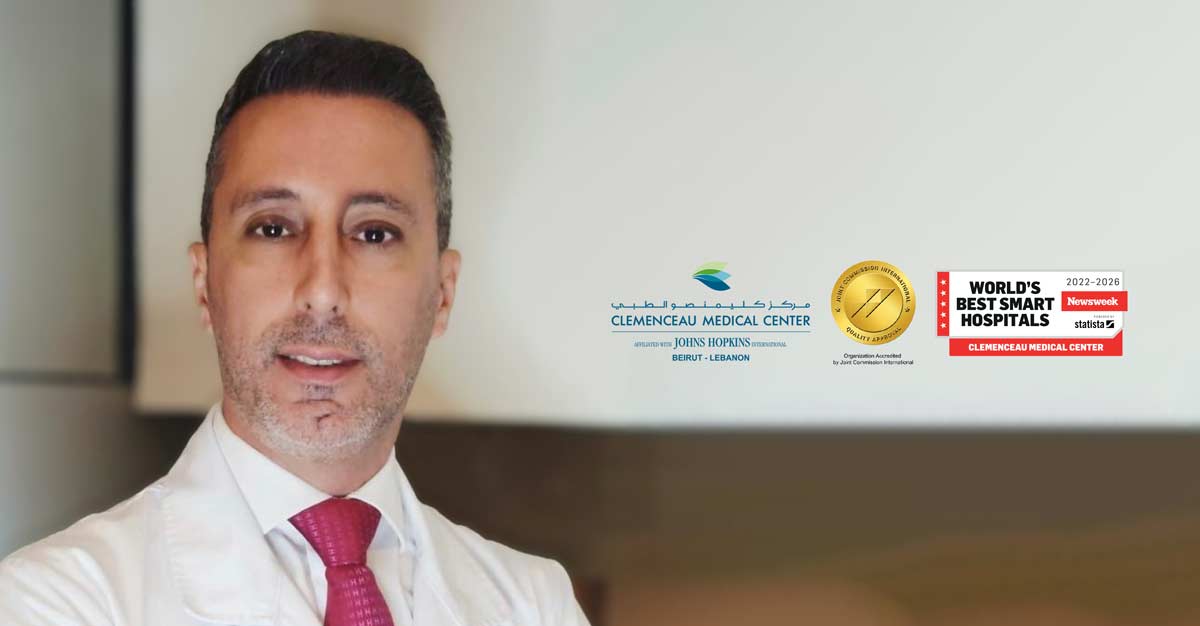
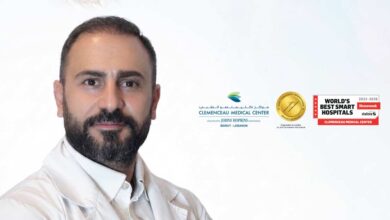
Physiotherapy is increasingly evolving beyond symptom management toward comprehensive rehabilitation focused on restoring mobility, independence, and quality of life. At Clemenceau Medical Center – Beirut, this approach combines individualized rehabilitation programs, multidisciplinary collaboration, and advanced therapeutic modalities to support patients throughout their recovery journey. In this interview, Dr. Carlo Saad, Head of the Physiotherapy Unit at CMC, discusses the unit’s latest developments, including Magnetotherapy, Shockwave Therapy, and Cryogun Cryotherapy, as well as CMC’s approach to personalized rehabilitation and its plans to further expand specialized pathways for orthopedic, sports, neurological, and mobility-related conditions.
What key new services and programs has the Physiotherapy Unit at Clemenceau Medical Center – Beirut recently introduced?
At Clemenceau Medical Center – Beirut, our vision for physiotherapy is to provide patients with evidence-based, individualized, multidisciplinary rehabilitation focused on meaningful functional outcomes.
As part of this ongoing development, we have recently expanded our therapeutic capabilities with the introduction of three advanced modalities: Magnetotherapy, Shockwave Therapy, and Cryotherapy using Cryogun technology. These technologies complement our established physiotherapy services and allow us to provide a broader range of treatment options for pain management, inflammation and edema control, tissue recovery, and functional rehabilitation.
However, it is important to emphasize that these modalities are not used in isolation. They are incorporated into carefully designed rehabilitation programs that may include therapeutic exercise, manual therapy, neuromuscular rehabilitation, gait and balance training, and patient education. Our ultimate objective is to move beyond treating symptoms and to address the underlying functional limitations that affect a patient’s mobility, independence, and quality of life.
What new technologies, equipment, or rehabilitation techniques have been incorporated into the unit, and how do they enhance patient care?
The introduction of Magnetotherapy, Shockwave Therapy, and Cryogun Cryotherapy represents an important expansion of our therapeutic armamentarium.
Magnetotherapy uses electromagnetic fields and may be incorporated into selected rehabilitation protocols as an adjunctive treatment, particularly when the therapeutic objective includes pain management or supporting tissue and bone healing processes.
Shockwave Therapy uses focused or radial acoustic energy, depending on the equipment and clinical indication. It has become an important non-invasive option in the management of selected musculoskeletal conditions, particularly certain chronic tendinopathies and other soft-tissue disorders. It can complement an active rehabilitation program by addressing pain and stimulating tissue remodeling. Cryogun Cryotherapy allows us to deliver targeted cold therapy. This can be particularly useful for pain and edema management following acute injuries or surgical procedures, when clinically appropriate.
What these technologies provide is greater therapeutic flexibility. They allow our physiotherapists to select and combine interventions according to the patient’s diagnosis, clinical presentation, stage of healing, tolerance, and rehabilitation goals.
Technology itself is only one component of the treatment. Its real value comes from appropriate clinical assessment, correct indication, and integration into an active rehabilitation program.
Which conditions and patient groups can benefit most from these new physiotherapy and rehabilitation services?
The potential patient population is broad and includes individuals with orthopedic, musculoskeletal, sports-related, post-operative, neurological, and mobility-related conditions.
Shockwave Therapy can be particularly relevant for selected chronic tendon and soft-tissue conditions, while Cryogun Cryotherapy can be useful when controlling pain and swelling is an important component of the rehabilitation process. Magnetotherapy may be considered in selected cases as an adjunct to conventional rehabilitation, depending on the clinical indication. Our approach, however, is deliberately patient-specific. We do not consider any technology to be universally appropriate. Before introducing a modality, we evaluate the patient’s diagnosis, medical history, functional status, treatment objectives, and any potential contraindications. This ensures that advanced technology is used appropriately and responsibly, as part of a broader evidence-based rehabilitation strategy.
How are rehabilitation programs personalized according to each patient’s condition, functional abilities, and recovery goals?
Personalization is fundamental to modern rehabilitation. Two patients may have the same medical diagnosis but very different functional limitations, lifestyles, expectations, and recovery goals. Therefore, treatment cannot be based on the diagnosis alone.
Our rehabilitation process begins with a detailed functional assessment, including parameters such as pain, range of motion, muscle strength, balance, gait, coordination, endurance, mobility, and ability to perform daily activities. We then establish individualized goals with the patient. These goals may range from returning to independent daily activities, walking safely, or recovering after surgery to achieving high-level athletic performance. The rehabilitation program is subsequently progressed according to objective clinical findings and the patient’s response to treatment. In other words, the patient’s progress determines the progression of the program; not simply a predetermined timetable.
What specialized rehabilitation programs are available for patients recovering from orthopedic surgery, sports injuries, neurological conditions, or mobility problems?
Our rehabilitation services encompass a wide spectrum of clinical needs.
For orthopedic and post-operative rehabilitation, programs are structured according to the type of surgery and the surgeon’s protocol. They may include pain and edema management, restoration of joint mobility, progressive strengthening, gait and weight-bearing training, functional retraining, and a gradual return to normal activities.
For sports injuries, rehabilitation focuses not only on symptom resolution but also on restoring strength, flexibility, proprioception, balance, coordination, movement quality, and sport-specific performance. An important objective is to prepare the athlete for a safe return to sport and to address modifiable factors that may contribute to recurrence.
For neurological rehabilitation, treatment is centered on maximizing functional independence. Depending on the patient’s condition, this can include gait and balance training, motor control, coordination, strengthening, mobility training, and functional task practice.
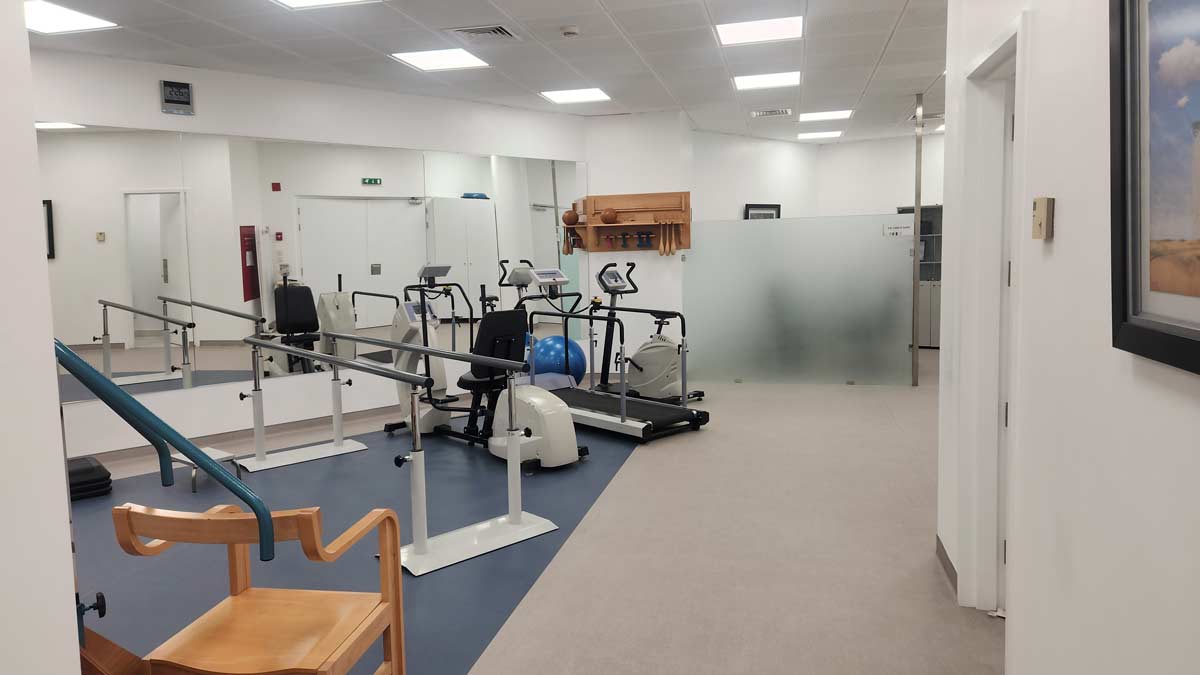
For patients experiencing mobility limitations, our focus is on improving safe movement and independence through individualized strengthening, balance and gait rehabilitation, functional training, and education. Across all these programs, the emphasis is on measurable functional improvement and the patient’s ability to return to meaningful activities.
How does the Physiotherapy Unit collaborate with other medical and surgical specialties at CMC to provide integrated rehabilitation and continuity of care?
Rehabilitation is most effective when it is integrated into the patient’s overall medical pathway. At CMC, the Physiotherapy Unit works in close collaboration with the relevant medical and surgical specialties, including orthopedics, neurology, neurosurgery, cardiology, rheumatology, rehabilitation medicine, and other clinical services according to the patient’s needs. This multidisciplinary communication is particularly important for patients following surgery or those with complex medical conditions. It enables us to understand the patient’s medical status, surgical procedure, precautions, restrictions, and overall treatment objectives. We also communicate with the treating physicians regarding the patient’s progress and functional response when appropriate. This model creates continuity between medical treatment, surgical intervention, and rehabilitation, ensuring that physiotherapy is not viewed as a separate phase of care but as an integral component of the patient’s recovery journey.
What distinguishes CMC’s approach to physiotherapy and rehabilitation, and what further developments are planned for the unit?
I believe what distinguishes CMC’s approach is our commitment to combining clinical expertise, advanced technology, individualized care, and multidisciplinary medicine within one integrated healthcare environment.
We are particularly focused on ensuring that rehabilitation remains patient-centered. Advanced modalities such as Magnetotherapy, Shockwave Therapy, and Cryogun Cryotherapy expand our treatment options, but they are always integrated within a broader clinical strategy. Our philosophy is that technology should enhance clinical decision-making, not replace it. The foundation of rehabilitation remains a thorough assessment, therapeutic exercise, functional training, education, and continuous reassessment.
Looking ahead, our objective is to continue developing specialized rehabilitation pathways, strengthen our multidisciplinary programs, adopt additional evidence-based technologies and techniques, and further enhance objective assessment of functional outcomes. We also see significant potential in developing increasingly specialized pathways for areas such as post-operative rehabilitation, sports rehabilitation, neurological rehabilitation, chronic musculoskeletal conditions, and mobility and functional recovery.
Ultimately, our ambition is to establish the Physiotherapy Unit at CMC as a center of excellence where patients receive not simply treatment for a condition, but a structured pathway toward recovery, independence, and improved quality of life. For us, rehabilitation is not the final step after medical or surgical treatment’ it is an essential part of the patient’s journey from illness or injury back to function.