Adimate®: Redefining Lipofilling Through Automation and Precision in Aesthetic Surgery
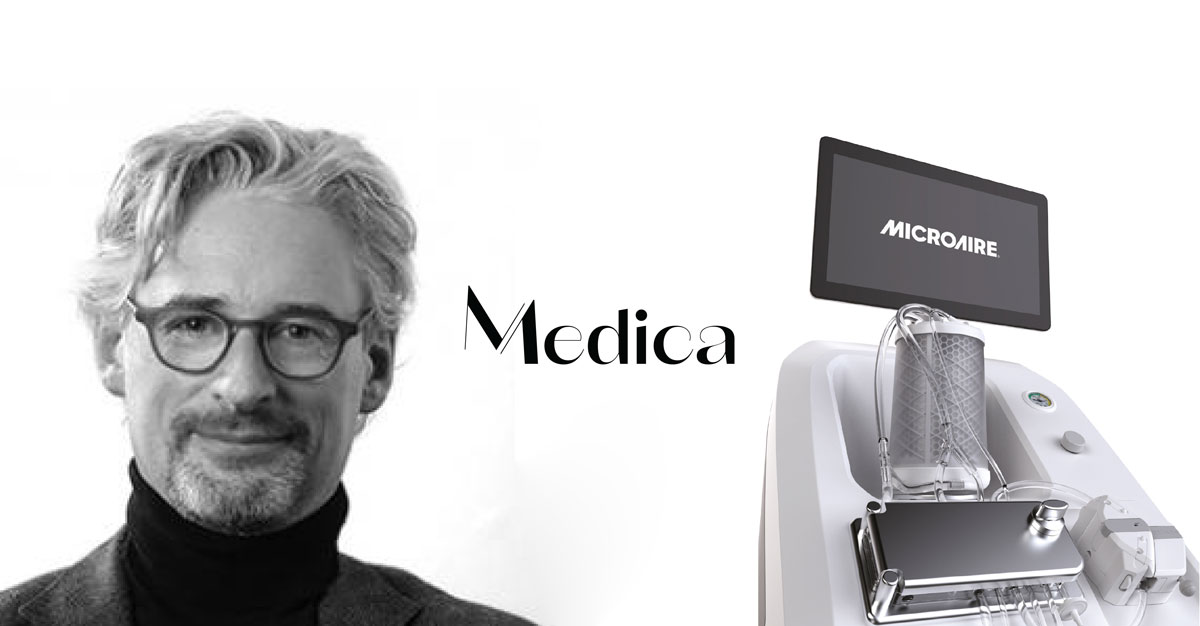
As aesthetic and reconstructive surgery continues to evolve toward more refined, efficient, and regenerative approaches, lipofilling has emerged as a cornerstone technique with expanding clinical applications. At the forefront of this transformation is Adimate®, an innovative automated platform designed to optimize fat harvesting, purification, and reinjection within a single, streamlined system. In this exclusive interview, Dr. Xavier Nelissen, Plastic, Reconstructive, and Aesthetic Surgeon, shares his insights on how Adimate® is reshaping surgical workflows, enhancing graft quality, and setting new standards in patient outcomes.
Dr., in a few words, could you describe the Adimate device and its role in modern aesthetic and plastic surgery?
Adimate® is an automated multifunction device designed to perform liposuction, infiltration, and lipofilling within a single integrated platform. Its key advantage lies in enabling the surgeon to independently harvest, purify, and reinject fat without the need for additional assistance, thereby streamlining the entire procedure. Lipofilling is a widely established technique used in reconstructive, aesthetic, and regenerative surgery. In reconstructive surgery, it is frequently applied in breast reconstruction to restore volume or improve soft tissue coverage around implants.
In aesthetic surgery, it plays a central role in composite breast augmentation, allowing implant placement in front of the pectoral muscle for a more natural result and lighter postoperative recovery.
It is also used in buttock augmentation and high-definition body contouring.
Finally, lipofilling is a cornerstone of regenerative surgery due to the presence of adipose-derived stem cells. Adimate® therefore supports and optimizes a versatile and increasingly essential technique with expanding clinical applications.
How does Adimate technology work during fat harvesting procedures?
Adimate® functions as an automated platform for fat harvesting, infiltration, and purification. For each patient, a single-use disposable kit is utilized. Fat harvesting is performed using either a conventional cannula or a power-assisted liposuction system (PAL), following infiltration carried out via Adimate®. Once the desired volume is collected, the surgeon initiates the purification phase, which is then fully automated without any additional human intervention. The system relies on active rotary filtration, a gentle process compared to centrifugation, preserving adipocyte integrity. Two washing cycles remove impurities and residual fluids.
The purification of approximately 500 cc of fat takes less than 10 minutes, allowing the surgeon to continue the procedure uninterrupted.
What are the main features that differentiate Adimate from other devices on the market?
Adimate® is distinguished by its fully automated purification process based on active rotary filtration. This technology enables the gentle processing of adipose tissue, preserving graft viability more effectively than traditional methods. Unlike decantation, centrifugation, or passive filtration, which are time-consuming and operator-dependent, Adimate® eliminates manual handling, improving workflow efficiency and reducing operative time.
Scientific evidence has demonstrated that active filtration provides superior graft quality compared to conventional techniques, positioning Adimate® as a major innovation
in lipofilling.
What motivated you to start using Adimate in your practice?
The adoption of Adimate® was driven by three main factors: graft quality, efficiency, and workflow optimization.
First, the system provides superior fat quality, with volumetric survival rates exceeding 90%, resulting in stable outcomes and reducing the need for repeat procedures.
Second, its rapid purification process (approximately 10 minutes for 500 cc) significantly reduces operative time and anesthesia exposure, while increasing surgical productivity,potentially allowing up to 30% more procedures per operating day.
Third, the system addresses staffing constraints by eliminating the need for personnel dedicated to fat processing, increasing surgeon autonomy and simplifying intraoperative logistics.
How does Adimate support lipofilling and fat grafting procedures?
Adimate® supports lipofilling through active rotary filtration, in which harvested fat is processed in a rotating filter that gently separates fluids, similar to a controlled spinning mechanism. Compared to conventional centrifugation (≈1200 g), which can damage adipocytes, Adimate® operates with forces approximately 100 times lower, resulting in less cellular trauma and improved graft viability.
Additionally, the entire process is performed in a closed system, from harvesting to reinjection, ensuring optimal sterility and reducing the risk of postoperative infection.
In your experience, does Adimate improve the quality and viability of harvested fat?
Yes, Adimate® significantly improves both fat quality and viability. Active filtration combined with washing has been shown, in vitro and in vivo, to be superior to conventional techniques.
Volumetric survival rates exceed 90%, and the purified fat shows reduced fibrosis and absence of oil cysts. Imaging studies, such as ultrasound at 6 months, confirm the absence of fat necrosis or cystic changes. These results demonstrate a consistently high and currently unmatched quality of adipose tissue.
What are the main clinical indications for Adimate, and which patients benefit the most from this technology?
Adimate® is indicated for all lipofilling procedures involving volumes greater than approximately 50 cc.
It is particularly beneficial for patients requiring moderate to large-volume grafting, including breast reconstruction, composite breast augmentation, buttock augmentation, and high-definition body contouring. Patients with fibrotic adipose tissue, especially after bariatric surgery, also benefit significantly, as larger volumes may be required and efficient processing becomes critical.
What type of results have you observed in your patients after procedures performed with Adimate?
The results are highly stable and predictable. Fat resorption stabilizes after approximately 4 months, with more than 90% of the injected volume maintained. A physiological resorption of 5–10% corresponds to the liquid phase necessary for reinjection and does not reflect loss of viable fat. An additional advantage is the possibility of performing the entire procedure under local anesthesia with light sedation, enabling less invasive approaches such as fat-only breast augmentation or composite techniques, with faster recovery.
Would you recommend Adimate to other plastic surgeons or hospitals, and why?
Yes, Adimate® represents a major advancement in lipofilling.
Its fully automated, rapid, and closed-loop system ensures superior fat quality, enhanced sterility, and improved procedural safety. It streamlines the surgical workflow, reduces the need for operating room personnel, and lowers associated costs.
Furthermore, the reduction in operative time increases surgical throughput and overall efficiency, making it a valuable tool for both surgeons and healthcare institutions.