Tunisia’s Digital Health Vision: Bringing Healthcare Closer to Every Citizen
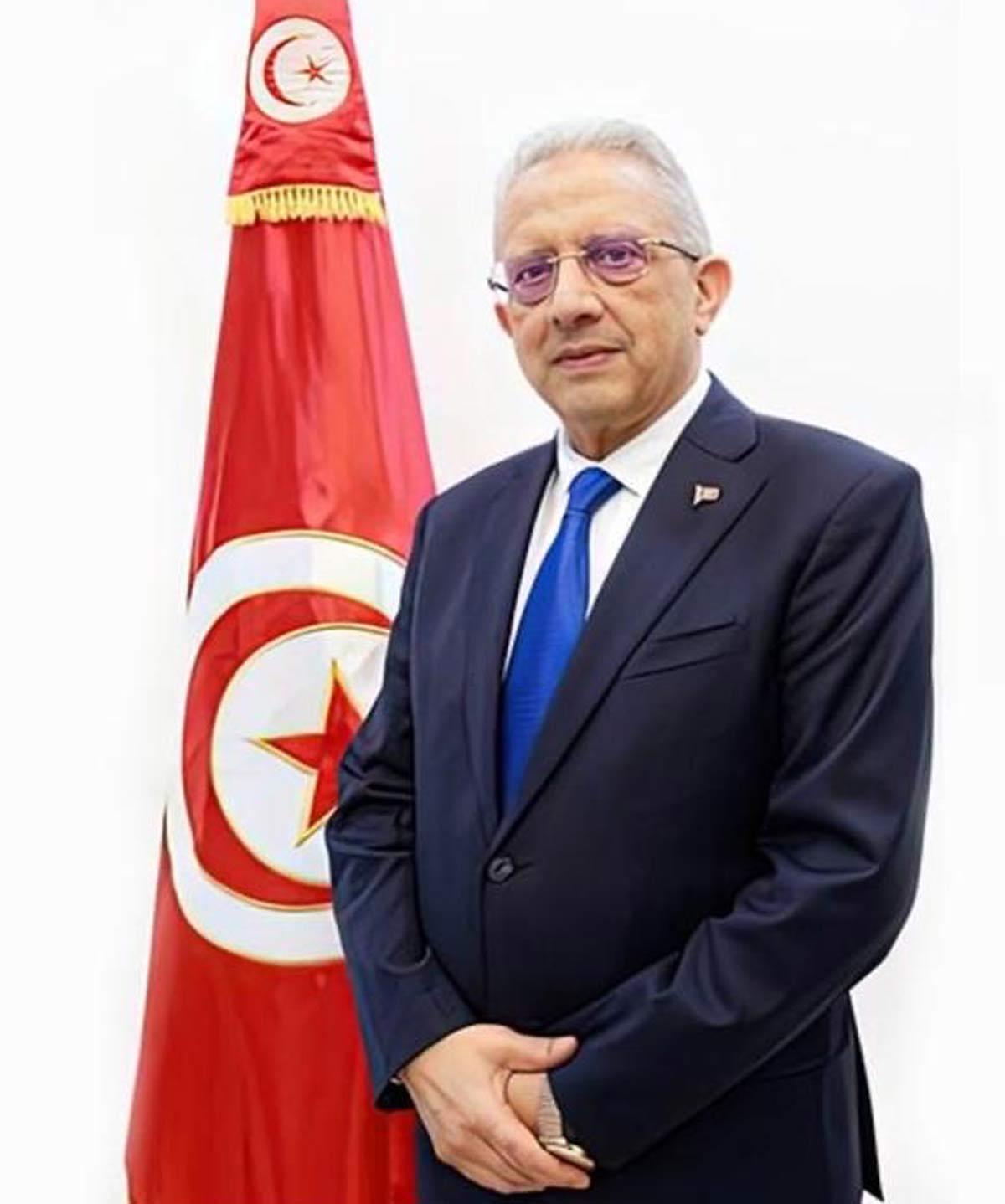
Tunisia is accelerating the transformation of its healthcare system, placing digital health at the heart of efforts to improve access, efficiency and equity. In an exclusive interview with The Arab Hospital Magazine on the occasion of Telehealth Connect 2026, H.E. Mustapha Ferjani, Minister of Health of the Republic of Tunisia, discusses the country’s healthcare priorities, the progress of the Digital Hospital, the growing role of AI and telemedicine, and Tunisia’s vision for stronger regional healthcare cooperation.
Minister, how do you see Tunisia’s healthcare system evolving, and what are the government’s key priorities for the years ahead?
Our vision is built on a simple principle: ensuring that every citizen has equitable access to quality healthcare, regardless of where they live. Tunisia has considerable medical, paramedical, scientific and technological expertise. Our responsibility today is to harness this potential more effectively around the needs of patients. Our priorities go hand in hand: strengthening public hospitals and community-based care, reducing regional disparities, modernizing infrastructure and equipment, improving care pathways, placing greater emphasis on prevention, and accelerating digital transformation. But digitalization is not an end in itself. Technology must serve health equity. When a scan performed in one region can be interpreted remotely by a specialist; when a woman can access specialist breast-imaging expertise without having to travel hundreds of kilometers; or when a physician has immediate access to the information needed to care for a patient, digital health becomes a genuine tool for greater healthcare equity. That is the philosophy guiding our transformation.
Tunisia is recognized for its strong medical expertise. How do you intend to strengthen public hospitals while improving access to and the quality of care?
A modern hospital is not simply a building equipped with advanced technology. It rests on four pillars: skilled healthcare professionals, appropriate infrastructure, high-performance equipment, and the effective organization of information and care. We are working on all four fronts simultaneously.
We are strengthening technical capabilities and hospital capacity, particularly in regions where access to certain specialties has historically been limited. At the same time, we are developing new models of collaboration between local, regional and university hospitals. The Digital Hospital illustrates this new approach. Rather than systematically asking patients to travel to specialists, we are increasingly bringing specialist expertise to the patient. This is what teleradiology, remote medical expertise and teleconsultation already allow us to do, with other fields gradually being added, including breast imaging, pathology and retinal imaging. This development complements investment in physical healthcare infrastructure; it does not replace it.
Digital transformation is a major part of your strategy. How will telemedicine, teleradiology, electronic medical records, the National Health Identifier and Sahetna.tn work together within one connected system?
Our goal is not to build a collection of separate applications. We are creating an interoperable national digital health ecosystem.
One of its foundations is the National Health Identifier, designed to provide every citizen with a unique identity throughout their healthcare journey. The Ministry has set a target of extending this identifier to all citizens by the end of 2026. This unique health identity will connect electronic medical records, laboratories, medical imaging, hospital information systems, telemedicine and services that citizens can access directly.
The Sahetna.tn portal is part of this vision. It is designed as a secure national platform through which citizens will gradually be able to follow their healthcare journey, appointments and medical information. Our ambition is to move away from a system in which data remain confined within individual institutions towards one in which information follows the patient throughout the care pathway, while maintaining strict standards of confidentiality and security.
What tangible changes do you want patients to experience as a result of this digital transformation?
Citizens will not judge digital transformation by the number of software systems we install. They will judge it by the difference it makes in their daily lives.
We want fewer unnecessary journeys, shorter waiting times, fewer repeated examinations and greater continuity of care.
All Tunisian hospitals are connected through a high-speed fibre-optic network, with an interoperable system linking the different healthcare facilities. Services are provided according to the needs of each hospital. On a daily basis, 30 hospitals are permanently connected for the interpretation of CT scans and MRIs, 24 hours a day, seven days a week, in addition to requests from emergency departments.
Behind this system are patients who can access medical expertise more quickly and closer to where they live.
That is ultimately what we are trying to achieve: saving time for both patients and healthcare professionals.
What role can telemedicine and the Digital Hospital play in reducing regional disparities in access to healthcare?
This is probably their most important contribution. Geography should no longer determine the quality of a patient’s access to medical expertise. For many years, when a specialty was not available locally, patients had to travel. Today, in many situations, we can bring specialist expertise to them remotely.
In Sbeitla, for example, the introduction of CT scanning was accompanied by access to remote interpretation by radiologists. This allows the local facility to provide the service even when a specialist is not physically present.
We are extending the same approach to other fields.
Tele-senology enables mammograms and other breast-imaging examinations to be shared remotely for specialist assessment.
Telepathology is gradually making it possible to transmit slides or digitized histological images for specialist review, which is particularly valuable when pathology expertise is not available locally.
Tele-retinal imaging, meanwhile, enables retinal photographs to be taken close to where patients live; particularly for screening for complications of diabetes’ and then transmitted for specialist interpretation.
We want to further develop this network-based model: patients remain close to home while expertise travels to them.
Teleradiology is one of the most visible achievements of the Digital Hospital. What has the experience taught you so far?
First, it has shown us that we can move rapidly from concept to real-world implementation.
More than 120,000 imaging examinations interpreted remotely in a single year is no longer an experiment. It is a genuine national healthcare service. It has also demonstrated that technology becomes truly valuable when it addresses a concrete problem: temporary shortages of specialists, continuity of care, diagnostic emergencies or geographical distance. The resolution adopted by the World Health Assembly in May 2026 on equitable access to diagnostic imaging through teleradiology moves in precisely this direction. The WHO has highlighted the value of this technology, particularly for remote and underserved areas.
Our next step is to move beyond radiology and develop a truly multidisciplinary network for remote medical expertise.
Which areas do you plan to develop next as part of the Digital Hospital?
We want to expand the Digital Hospital from its initial focus on teleradiology into a genuine national network for remote medical expertise. Several areas are particularly promising.
Tele-senology, including the interpretation and second reading of mammograms and the referral of suspicious cases.
Telepathology, which is particularly important in oncology, where rapid access to expert pathological assessment can determine the entire treatment strategy.
Tele-retinal imaging, particularly for screening for diabetic retinopathy.
We are also developing teleconsultation and remote medical expertise across different specialties, as well as applications for cardiovascular and neurological emergencies.
The objective is the same in every case: detect earlier, decide faster and bring expertise closer to the citizen.
Many healthcare innovations begin as pilot projects. How do you avoid the “pilot trap” and turn promising initiatives into sustainable services at scale?
This is an essential question. The digital health landscape is full of promising pilot projects that never become sustainable, real-world services. Several conditions are necessary to scale successfully. First, the project must address a genuine public-health need.
Second, there must be a national architecture and interoperability standards. A digital system that cannot communicate with other systems quickly becomes another barrier rather than a solution. Sustainable financing, a clear regulatory framework, strong cybersecurity requirements and robust data governance are also essential.
Above all, healthcare professionals must be involved. The experience of our Digital Hospital demonstrates the importance of this approach. You do not move from a handful of procedures to 120,000 remote examinations simply by installing a platform. You have to organize on-call coverage, define responsibilities and clinical pathways, ensure maintenance, provide training and continuously evaluate the service.
Success, therefore, is not purely technological. It is also organizational.
What role do you see artificial intelligence playing in Tunisia’s healthcare system?
Artificial intelligence represents a major opportunity, but it must be approached carefully and methodically. It can support medical imaging, clinical decision-making, screening, epidemiological surveillance, data analysis and the optimization of hospital resources. But our principle is clear: artificial intelligence should augment the capabilities of healthcare professionals, not replace their judgment. We must also pay close attention to the quality of the data used to train AI models.
African, Arab and Mediterranean populations may be underrepresented in some international datasets. It is therefore essential that we develop our own capabilities in research, evaluation and validation. Tunisia should not simply be a consumer of algorithms developed elsewhere. It should be able to contribute to their design, evaluate them within its own population and participate in the international governance of AI in healthcare.
Has cybersecurity now become a healthcare issue in its own right?
Without question. A cyberattack on a hospital is no longer simply an IT problem. It can disrupt a laboratory, make medical imaging unavailable, prevent access to patient records or interfere with an emergency department. It can therefore pose a direct risk to patient safety. Cybersecurity must be built into systems from the outset, including identity management, access control, traceability, backups, business continuity, infrastructure security and staff training. But beyond technology, the central issue is trust. Citizens will embrace digital health if they know their data are protected. There can be no sustainable digital health without digital trust.
What does health data sovereignty mean to you?
Health data concern some of the most intimate aspects of a person’s life. They must therefore be protected to an exceptionally high standard.
Data sovereignty does not mean closing off data or preventing international research.
It means retaining control over how data are governed: knowing where they are hosted, who can access them, for what purpose, for how long and under what safeguards.
Health data can be extremely valuable for research, prevention, epidemiology and the development of artificial intelligence.
But they must always be used according to transparent rules and in the interests of patients and public health.
Does digital transformation also require healthcare professionals to work differently and develop new skills?
It is essential. Digital transformation is not primarily about IT. It is about transforming the way healthcare is delivered and how professionals work. Doctors, nurses, pharmacists, technicians, biologists and administrators must be involved from the very beginning in designing these tools. We must also strengthen skills in telemedicine, health data, cybersecurity and artificial intelligence. But I would emphasize one principle: technology must make work easier. If digitalization simply adds administrative tasks to the workload of doctors or nurses, then we have failed. Instead, it should automate certain repetitive tasks and give healthcare professionals more time to devote to their patients.
What role should cooperation between the public sector, private sector, start-ups and industry play in this transformation?
Digital transformation is too broad and moving too rapidly to be driven by a single actor.
The State must set the strategy and ensure equity, standards, security, data protection and a clear regulatory framework. The private sector can contribute technology, investment, innovation and agility. Universities and research centres bring knowledge and scientific evaluation. Start-ups can develop solutions that are highly responsive to needs on the ground. We therefore want to develop partnerships, but according to a clear principle: innovation must serve the public interest. We also favour partnerships that build local capacity through technology transfer, training, research, industrial development and value creation in Tunisia.
Tunisia is hosting Telehealth Connect 2026. What concrete outcomes would you like to see emerge from the event?
We want Telehealth Connect to be a platform for action, not simply a forum for discussion.
In particular, we want to advance projects in telemedicine, artificial intelligence, data governance, interoperability and cybersecurity.
The event should also bring together public-sector decision-makers, healthcare systems, international organizations, researchers, investors and technology companies. Our ambitions extend beyond Tunisia. We want to strengthen bridges between Africa, the Arab world and the Mediterranean. Digital health must not become another source of inequality between countries. On the contrary, it can become a powerful instrument for solidarity and the sharing of expertise.
Where do you see the greatest opportunities for regional healthcare cooperation?
I see four major areas with particularly strong potential. The first is remote medical expertise. Today, we can build regional networks of specialists without systematically requiring patients to travel. The second is the training of healthcare professionals. The third is research and artificial intelligence. And the fourth is system interoperability and data governance.
Tunisia occupies a distinctive position at the crossroads of Africa, the Arab world and the Mediterranean. It has a respected medical tradition, strong engineering expertise, a skilled research community and an active digital ecosystem. Our ambition is to turn this strategic position into a platform for cooperation rather than simply a geographical advantage.
What message would you send to international technology companies and investors interested in Tunisia?
Our message is simple: come and build with us. We are not looking simply for technology suppliers. We are looking for partners who can contribute to training, technology transfer, research, the development of local expertise and the creation of solutions adapted to our realities. Tunisia can offer a particularly valuable environment for developing and evaluating solutions for the Arab world, Africa and the Mediterranean.
We have highly skilled healthcare professionals, engineers, researchers and start-ups. The next step is to build stronger connections between these ecosystems.
Finally, looking ahead to 2030, what kind of healthcare system would you like to see emerge in Tunisia?
I would like to see a system in which every citizen has a simple, accessible and equitable point of entry into healthcare.
A system in which each person has a unique health identity and relevant information follows the patient throughout the care journey. A system where community-based healthcare is strengthened and university hospitals share their expertise across the entire country. A system capable of using data and artificial intelligence to improve prevention and diagnosis and to manage healthcare resources more effectively. But above all, I want us to avoid one fundamental mistake: digitizing existing inequalities.
Digital transformation must do precisely the opposite. It must reduce distances, shorten waiting times and democratize access to expertise. Our Digital Hospital already provides a very concrete example: more than 120,000 imaging examinations performed remotely in one year across 30 hospitals, with continuous 24/7 coverage. We now want to extend this momentum to tele-senology, telepathology, tele-retinal imaging, teleconsultation, artificial intelligence and the citizen’s digital healthcare journey. If I had to summarize our ambition for 2030 in one sentence, it would be this: To make technology a means of bringing healthcare closer to people, making it more equitable and more human. And to make Tunisia a country that does not simply adopt digital health, but helps invent it, evaluate it and share it.