Regaining Independence After Five Years with Parkinson’s Disease
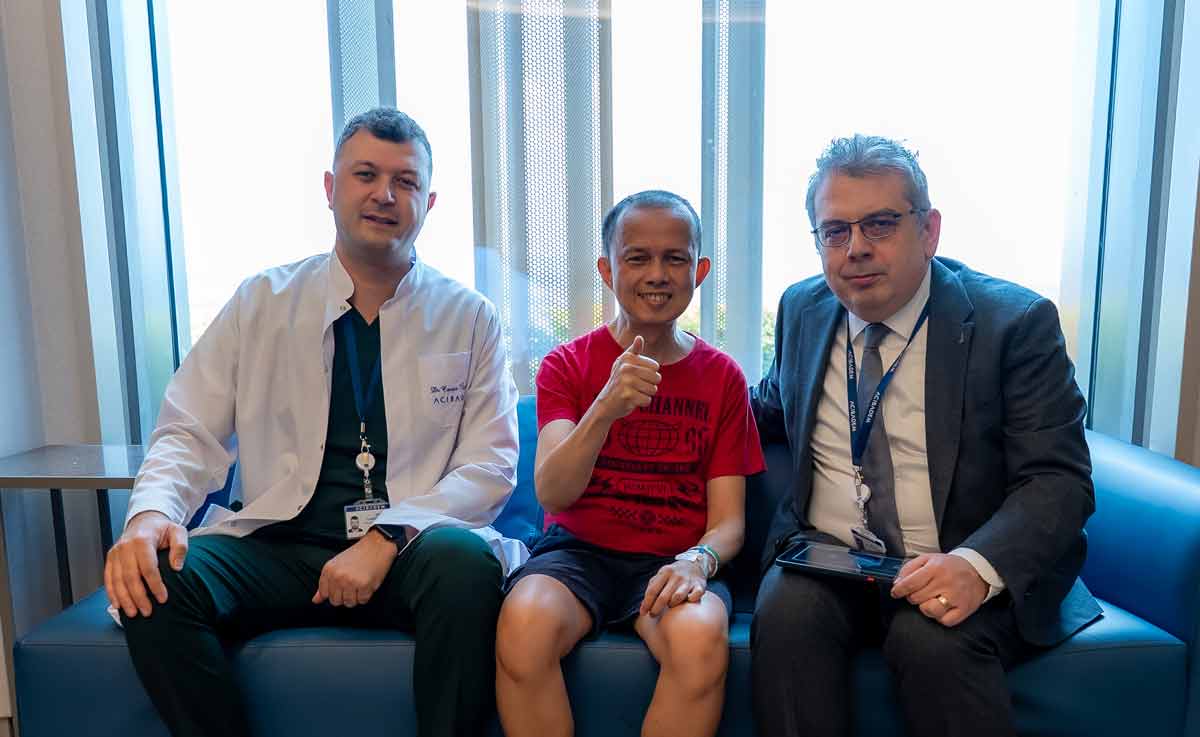
A real story of Bani Reza, which begins in London and is rewritten in İstanbul at Acıbadem Hospital, includes a treatment that makes it possible to manage Parkinson’s disease, allowing him to walk smoothly and eat easily again. Bani Reza, who was born in Malaysia, has lived in London for decades. He worked as an IT architect, designing computer systems for big companies and traveling around the world. However, he decided to take early retirement. It became difficult for him to manage Parkinson’s disease symptoms while trying to run to the airport and catch a plane.
Diagnosis and the Search for Solutions
The first sign was bradykinesia. It means that when you try to do anything, you move more slowly. Feeling stiff was another symptom. His back was constantly stiff, which caused pain. Tremor was also another problem. These are actually the common symptoms of Parkinson’s disease that are written in medical books. But how does it really affect a person’s life?
“You can’t sleep, you can’t watch TV, and you can’t relax. You can’t even go out for a meal. When you go out for a meal, you want to enjoy time with your family, but you can’t,” says Bani Reza. “I was diagnosed with Parkinson’s about five years ago, during the height of COVID. It was September 2020, I remember it clearly. I didn’t know what Parkinson’s was. The doctors told me not to research it too much and prescribed medication in London. It helped for the first two years. Then it started affecting my life to the point where it became debilitating.”
During the last three years, the symptoms worsened for Reza; unfortunately, this is also a very common scenario for Parkinson’s patients. After a certain period, medications may lose their effectiveness, and due to the nature of the disease, there is no going back. The condition continues to progress. This happens slowly in some patients and more rapidly in others.
After sharing that he could not live like this anymore, his neurologist in the UK presented him with several options. “I started to think about DBS surgery. In the beginning, I was not close to a surgical treatment, but after doing my research, I decided to go this way,” says Bani Reza.
Deep Brain Stimulation (DBS) involves placing a wire electrode in a specific area of the brain and implanting a stimulator under the skin near the collarbone. The stimulator sends electrical impulses to the electrode, helping regulate abnormal signals in the brain that cause Parkinson’s disease symptoms.
Searching for the Right Place for DBS Surgery
After believing that DBS surgery might help him, the next step for Reza was finding the right provider. At first, he had two main alternatives.
The first option was to return to Malaysia, where he was born. However, it meant a 13-hour flight, which felt too far. The second option was, of course, to have the surgery in the UK. Moreover, under the NHS it would be free of charge. However, there was an issue.
“I would have to wait almost two years. I didn’t want to feel like this any longer. First, you have to wait about a year just to get assessed. After the assessment, you may need to wait another six to twelve months. So in total it could be about two years. I didn’t want to live like this for another two years,” says Reza.
Bani Reza briefly explained how he began considering Türkiye and Acıbadem:
“I found the official Health Ministry of Türkiye website. There were thousands of hospitals listed there. First, I searched for hospitals in İstanbul. Then I filtered some criteria, such as a university hospital and a professor in neurosurgery. After that, I narrowed it down to six hospitals. I contacted and spoke with some of them. The first step that made me prefer Acıbadem was when an international representative called me. He was very responsive and came back to me very quickly, answering all my questions. He was also the first person to ask me appropriate medical questions.”
Acıbadem’s Expertise in Neurosurgery
Since Acıbadem Healthcare Group began serving patients 35 years ago, its Neurosurgery Clinic has become a globally recognized leader in its field. Neurosurgeons at Acıbadem have taken on leadership roles in prestigious international organizations, including the World Academy of Neurological Surgery, the International Society of Meningiomas, and the European Society for Pediatric Neurosurgery.
Professor Hayri Kertmen is one of these surgeons and focuses on the treatment of movement disorders such as Parkinson’s disease. For more than 15 years, he has worked on the treatment of this specific neurodegenerative disease and has helped hundreds of patients.
Reza was one of those experiencing gait disturbance, hand tremors, muscle stiffness, and slowness of movement. He was no longer benefiting from the medication he was taking and was also experiencing side effects from these drugs. Eventually, he was unable to manage his daily life independently.
After a thorough evaluation, Acıbadem’s neurosurgeons and neurologists determined that Deep Brain Stimulation (DBS) surgery could help alleviate Reza’s symptoms. The procedure was then planned and successfully performed.
Time to Enjoy Life Again
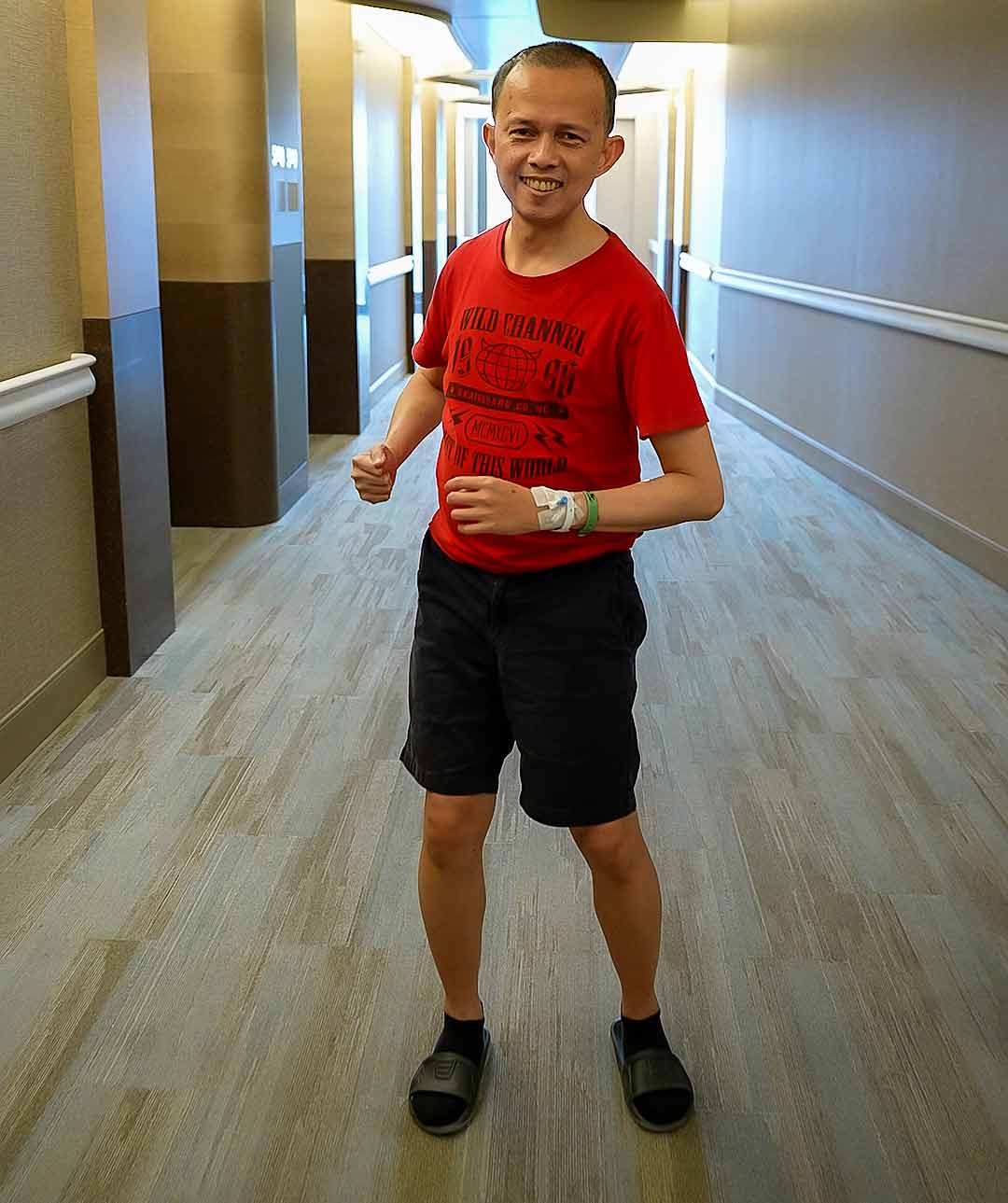
After the surgery, Reza’s symptoms were alleviated. His muscle stiffness and slowed movements decreased. He could move independently, no longer needed support to walk, felt better, and was able to enjoy life once again. Reza is almost ready to be discharged and return to his country. Before the discharge, we asked him how he feels. “Very, very hopeful and positive. I feel as though I’ve… I’m not quite normal yet, but I’m almost there, you know. Almost like before I knew what Parkinson’s was.”
If you’d like to learn more, you may contact our international offices in your region.