The Gulf’s Medical Tourism Race Will Be Won by Marketers, Not Builders
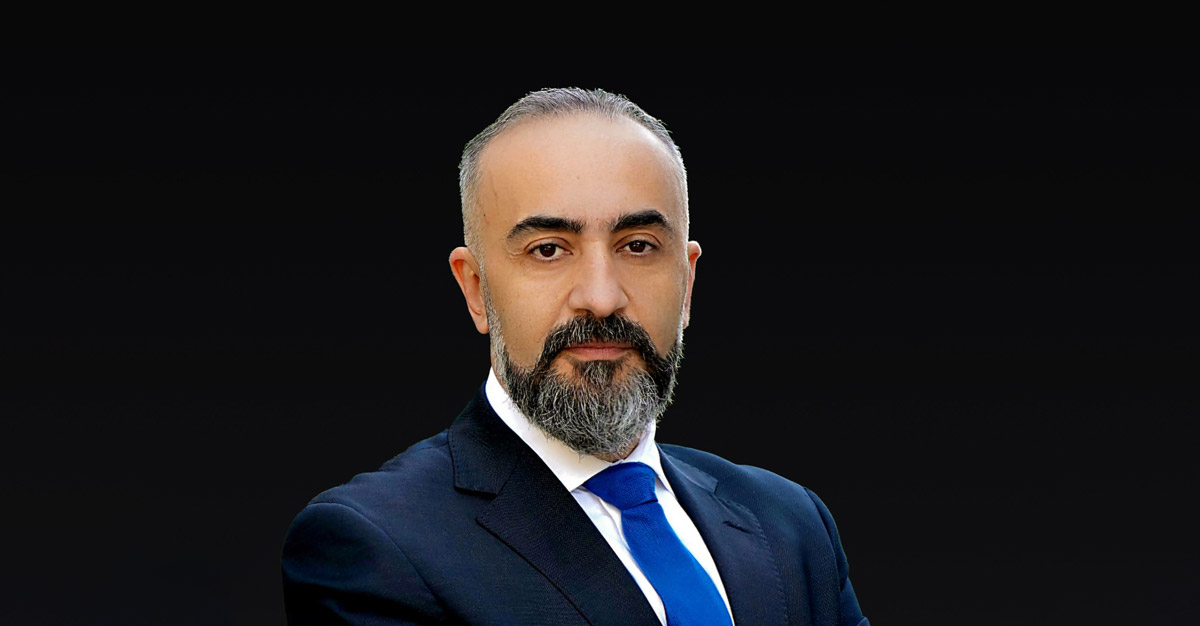
By Bob Issa, Group Chief Marketing & Communications Officer, Apex Health, Head of Qatar Chapter, World Council of Medical Tourism
Walk into any healthcare business conference in the GCC region today and you will hear the same sentence: we are aiming to become the region’s medical tourism hub.
The UAE said it first and deserves credit for proving the category could exist here at all. But the destination that opens a market is rarely the one that scales it, and the balance of leverage in this region has quietly shifted. Qatar and Saudi Arabia now hold the assets that decide the next phase: sovereign capital deployed at a different order of magnitude, aviation networks built to move people across three continents rather than one, hospitality capacity already standing, and clinical affiliations at the complex end of medicine where the economics are strongest. More than US$65 billion has been earmarked for Saudi healthcare investment by 2030 under the Health Sector Transformation Programme, with industry analysis pointing to demand for some 8,500 additional hospital beds in the Kingdom by 2029. Saudi Arabia also commands the largest inbound visitor flow in the Gulf region through religious tourism, a funnel no competitor can replicate. Qatar’s advantage runs the other way, toward concentration rather than volume: a compact, well-capitalised system that can move quickly and position at the premium, high-acuity end without cannibalising a large domestic base.
The ambition is right, and in Doha and Riyadh, the underlying assets are right too. What decides the outcome now is commercial execution: how those assets are positioned, packaged and distributed to create organized demand.
Consider the arithmetic honestly. The GCC remains, on balance, a net exporter of patients. Our own nationals continue to fly to London, Munich, Bangkok, Seoul and Istanbul for elective and complex care in numbers that should trouble anyone reading a business plan built on inbound volume. We are building world-class supply while the demand side stays thin: no distinctive positioning, few real distribution partnerships, and an acquisition funnel that most operators cannot describe, let alone measure.
Medical tourism is not a hospital business with a marketing department bolted on. It is a cross-border consumer acquisition business that happens to deliver its product in an operating theatre. The destinations that grasped this early are the ones now counting the revenue.
What the winners actually built
The usual benchmarks are invoked constantly and examined rarely, which is a shame, because their lessons are almost entirely commercial.
Türkiye is the most instructive. On figures published by USHAŞ, the state agency for international health services, it moved from roughly 300,000 health tourists and a billion dollars in revenue in 2015 to around 1.5 million patients and three billion dollars by 2024. It did not achieve this by becoming the best healthcare system in Europe. It achieved it by owning three categories outright hair restoration, dental and aesthetics, coordinating the sector through a single state body, and building one of the most aggressive performance-marketing and facilitator ecosystems anywhere in the world.
South Korea is strange and more interesting. Analysis by the Korea Institute for Industrial Economics and Trade, reported in the Korea Herald, found that foreign patients and their companions spent over twelve trillion won in 2025, close to US$8.1 billion, of which only about three trillion went on treatment itself. Roughly three-quarters of the money landed in hotels, retail, transport and restaurants. Korea did not market its way into aesthetic medicine; its culture did the work first, and the clinics followed the demand that K-beauty had already created. Brand pull arrived upstream of the hospital.
Thailand built the same position more slowly, over three decades, on hospitality-grade service design and a patiently cultivated network of agents and facilitators. India took a different route again, pairing a structural price advantage with government-enabled distribution through visa reform and a national platform.
Closer to home, the UAE established the working template: a single destination brand, one booking platform, more than 130 participating facilities, medical visa facilitation, and pricing packaged and published in advance. Dubai Health Authority figures record more than 691,000 international health tourists in 2023, generating around AED 1.03 billion in direct spend and an estimated AED 2.3 billion indirectly. Those are respectable numbers, and they are also the point: they show the model functions, and they sit well below what the region’s capital, aviation reach, and visitor flows could support. The template has been proven. It has not yet been scaled.
What none of these destinations can claim is clinical supremacy. Several are outperformed in outcomes by hospitals in Doha, Riyadh and Abu Dhabi. What they have that we largely do not is organized demand.
A closing caution for anyone reading market forecasts on this sector. Credence Research sizes the GCC medical tourism market at under half a billion dollars in 2024, rising to roughly US$890 million by 2032. IMARC Group puts the same market at US$9.6 billion in 2025, heading for US$22.5 billion by 2034. Both are credible houses. The twenty-fold gap between them exists because the industry has never agreed what counts as a medical traveler, or whether to measure treatment revenue alone or the full visitor economy around it. A strategy built on a single third-party number is built on sand. Measure your own funnel.
The five elements that decide who wins
Five things separate a medical tourism destination from a country with excellent hospitals. Only one of them is clinical.
Excellence paired with distinctive brand positioning at the hospital level. Excellence alone is a commodity every hospital in the region can claim it, and most do. What separates a hospital in the mind of an international patient is excellence paired with a clear, distinctive brand position: a memorable reason to choose that hospital over competitors. A brand without distinctive positioning is invisible at the moment of decision. A position without clinical excellence to back it is broken at first contact. What converts is the pair: clinical capability translated into a brand promise that resonates with the traveller’s actual need. That requires each hospital to own its positioning rather than default to the destination’s general messaging. It means publishing what you do differently, for whom, and why that matters to them.
Category ownership rather than general capability. Nobody boards a four-hour flight for high-quality healthcare in the abstract. They travel for a named procedure, a named surgeon, or an outcome they cannot get at home. Türkiye owns hair restoration; Korea owns aesthetics; Thailand owns cardiac and gender-affirming surgery. The region’s honest opening lies in complex, high-acuity care: oncology, cardiac, transplant, advanced fertility, precision medicine and longevity, where our clinical affiliations, technology and speed of access genuinely beat the alternatives.
Partnerships as the distribution system. Patients do not arrive from advertising. They arrive through channels, and every channel is a negotiated relationship: facilitator and agent networks in source markets, embassy and government sponsorship agreements, international insurer and payer contracts, airline and hospitality partnerships, corporate health accounts, and, most durably of all, referring physicians abroad willing to hand you their patients. Building a hospital is a capital decision. Building distribution is a commercial one, and it compounds over years in a way no campaign can shortcut. In any mature programme, most international volume arrives through partners rather than direct response.
An acquisition funnel measured to arrival, not to enquiry. Most international patient units in this region report leads. Leads are close to meaningless here. The journey from first enquiry to a patient in a bed runs through records review, clinical opinion, quotation, visa, flight, escort, and a decision usually taken by a family rather than an individual, and volume leaks at every stage. What matters is cost per arrived patient, stage-by-stage conversion, time from enquiry to quotation, and revenue per case by source market. Until a destination knows what an arrived patient costs by channel, it is not running an acquisition programme. It is running a media spend.
Trust as a conversion asset, and the patient as a channel. An international patient is making a high-stakes purchase, in a foreign legal system, sometimes a second language, usually in cash. Trust is not a brand value in this business; it is the mechanism that converts. That means accreditation as a baseline, published outcomes rather than marketing claims, all-in pricing with a written position on complication costs, and visible medico-legal recourse. Then extend it beyond discharge, into structured aftercare in the patient’s own city and a deliberate advocacy programme. In every mature market, word of mouth inside diaspora and national communities is the highest-converting and cheapest channel available. It is also the one almost nobody manages on purpose.
What decides the race?
The race is won by hospitals that own their market position and build distribution, not by those that build beds. Excellence paired with distinctive positioning, backed by partnerships that move volume that is how you win.
Three things decide it: excellence paired with distinctive brand positioning that each hospital owns; partnerships that move patients reliably from inquiry to arrival; and a patient journey designed for decision and aftercare, not just treatment. The key is translating clinical excellence into market positions that matter, building the distribution relationships that create volume, and managing the full patient pathway so that arrival becomes advocacy. Qatar and Saudi Arabia are positioned to lead this decade. The path is clear: convert those assets into organised demand.
Sources: USHAŞ (Türkiye state agency for international health services), 2024 health tourism figures; Korea Institute for Industrial Economics and Trade, via the Korea Herald, 2025; Dubai Health Authority, 2023 health tourism report, and Dubai Health Experience; Saudi Vision 2030 Health Sector Transformation Programme; Credence Research and IMARC Group, GCC medical tourism market assessments. Cross-country comparisons should be read as order-of-magnitude estimates: definitions of a medical traveller and methods of counting differ materially between destinations.
Bob Issa is Chief Marketing & Communications Officer at Apex Health and chairs the Qatar Chapter of the World Council of Medical Tourism. The views expressed are his own.