Where Science Meets Hope: Advances in IVF and the Journey to Parenthood
By Dr. Maysa Khadra, Consultant in Obstetrics & Gynecology-Reproductive Medicine and IVF / Head of IVF Centre at Al-Ahli Hospital/Qatar - Associate Professor -Qatar University
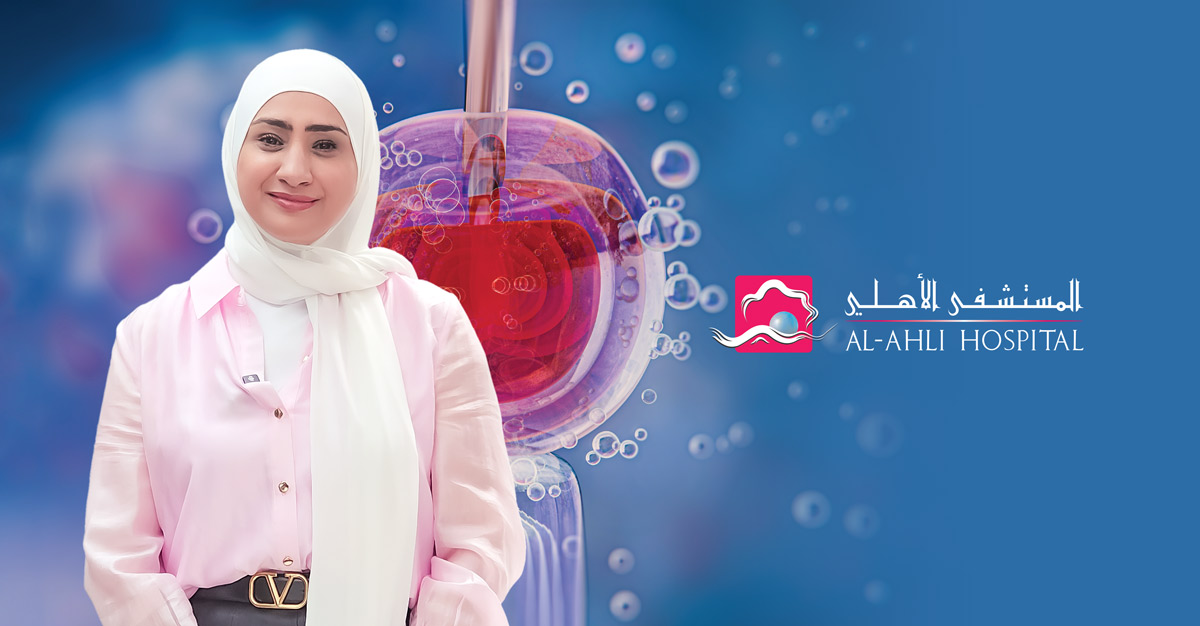
Insights from the IVF Center at Al-Ahli Hospital
Coronary Artery Disease affects the Arteries that supply blood to the Heart Muscle. It is a common cause of Morbidity and Mortality worldwide. The arteries can be narrowed (Stenosis) or totally blocked (Occlusion). When occlusions persist for a long time, they are called “Chronic Total Occlusion” (CTO). Infertility affects millions of couples worldwide and carries grave emotional, psychological, and social consequences. For many families, the journey toward parenthood can become a long and uncertain path marked by hope, frustration, and resilience. In regions such as the Middle East, where family and parenthood hold deep cultural and social significance, the inability to conceive can be particularly challenging for couples and their communities.
Over the past few decades, advances in reproductive medicine have transformed infertility from what was once an often silent and difficult struggle into a condition that can frequently be treated successfully. Among the most remarkable breakthroughs in this field is In Vitro Fertilization (IVF)—a scientific innovation that has enabled millions of couples around the world to achieve their dream of having a child.
Since the birth of the first IVF baby in 1978, assisted reproductive technologies have advanced dramatically. Today, IVF combines sophisticated laboratory science, clinical expertise, and personalized patient care to provide effective solutions for many causes of infertility.
In Qatar, fertility medicine has developed rapidly over the past decade, supported by advanced healthcare infrastructure and increasing awareness of reproductive health. Couples today have access to highly specialized fertility centers that provide modern diagnostic tools, advanced embryology laboratories, and internationally aligned clinical standards.
Understanding IVF: A Modern Medical Solution
IVF is part of a broader group of treatments known as Assisted Reproductive Technologies (ART). The treatment process typically includes several carefully coordinated steps:
- Ovarian Stimulation: Medications are used to stimulate the ovaries to produce multiple eggs, increasing the chances of successful fertilization.
- Egg Retrieval: Mature eggs are collected from the ovaries through a minimally invasive procedure performed under ultrasound guidance.
- Fertilization in the Laboratory: Eggs are fertilized with sperm in a controlled laboratory environment. In many cases, a technique called intracytoplasmic sperm injection (ICSI) is used, where a single sperm is injected directly into the egg to improve fertilization rates.
- Embryo Development and Selection: Fertilized eggs develop into embryos over several days while being carefully monitored by embryologists.
- Embryo Transfer: One or more embryos are transferred into the uterus, where implantation and pregnancy may occur.
IVF can help couples facing a wide range of fertility challenges, including tubal disease, male factor infertility, ovulatory disorders, endometriosis, unexplained infertility, and certain genetic conditions.
IVF by the Numbers (Global Perspective)
More than 10 million babies have been born worldwide through IVF and assisted reproductive technologies. 1 in 6 couples globally experience infertility at some point in their reproductive lives.
Advances in laboratory technology and embryo selection have significantly improved IVF success rates over the past two decades.
Early evaluation and personalized treatment strategies can greatly improve outcomes for many couples.
Advances Transforming IVF Success
Over the past two decades, major scientific and technological advances have significantly improved IVF success rates and safety.
Advanced Embryology Laboratories: Modern IVF laboratories operate under strictly controlled environmental conditions, including specialized air filtration systems, precise temperature regulation, and high-performance incubators that support optimal embryo development.
Intracytoplasmic Sperm Injection (ICSI): ICSI has revolutionized treatment for male infertility, enabling fertilization even in cases of severe sperm abnormalities.
Embryo Cryopreservation: Vitrification techniques allow embryos to be frozen and stored safely for future use, preserving fertility and improving cumulative pregnancy rates.
Preimplantation Genetic Testing (PGT): PGT allows screening of embryos for chromosomal abnormalities or inherited conditions, helping improve implantation rates and reduce miscarriage risk in selected patients.
Time-Lapse Embryo Monitoring: Advanced imaging technology allows continuous monitoring of embryo development without disturbing the culture environment, assisting embryologists in selecting the most viable embryos.
These innovations have transformed IVF into a highly sophisticated and personalized field of medicine.
The IVF Center at Al-Ahli Hospital
The IVF Center at Al-Ahli Hospital represents one of the leading private fertility services in Qatar. As an ISO-certified facility, the center adheres to internationally recognized standards in laboratory quality, patient safety, and clinical governance.
By integrating advanced laboratory technologies with experienced reproductive medicine specialists and highly trained embryologists, the center offers comprehensive fertility evaluation and individualized treatment strategies for each patient.
Building Trust Through Patient-Centered Fertility Care
While IVF is rooted in advanced science, successful fertility treatment extends beyond laboratory technology. The emotional journey of infertility often requires reassurance, clear communication, and personalized medical guidance. Patient-centered fertility care includes:
- Comprehensive fertility assessment for both partners
- Clear explanation of treatment options and success probabilities
- Individualized treatment protocols
- Ongoing medical follow-up and emotional support
- Such an approach helps couples feel informed and supported throughout their treatment journey. As Dr. Maysa Khadra, Consultant in Reproductive Medicine and IVF at the center, explains: “Fertility treatment is not only about technology. It is about listening to patients, understanding their journey, and guiding them with honesty and compassion. When science, experience, and trust come together, we can help families achieve what once seemed impossible.”
Looking Ahead
Reproductive medicine continues to evolve at a remarkable pace. Emerging technologies in genetics, embryo selection, and fertility preservation are expected to further improve outcomes and expand treatment possibilities.
At the same time, awareness of reproductive health is increasing across the region. More couples are seeking early evaluation and exploring fertility options proactively, which often improves treatment success. Through continued scientific innovation, high clinical standards, and compassionate patient care, fertility centers will remain at the forefront of helping couples turn the dream of parenthood into reality.
“Every successful pregnancy represents not only a scientific achievement, but also the fulfillment of a deeply personal dream for families who have often waited many years. Being part of that journey is both a privilege and a responsibility.” said Dr. Maysa Khadra.