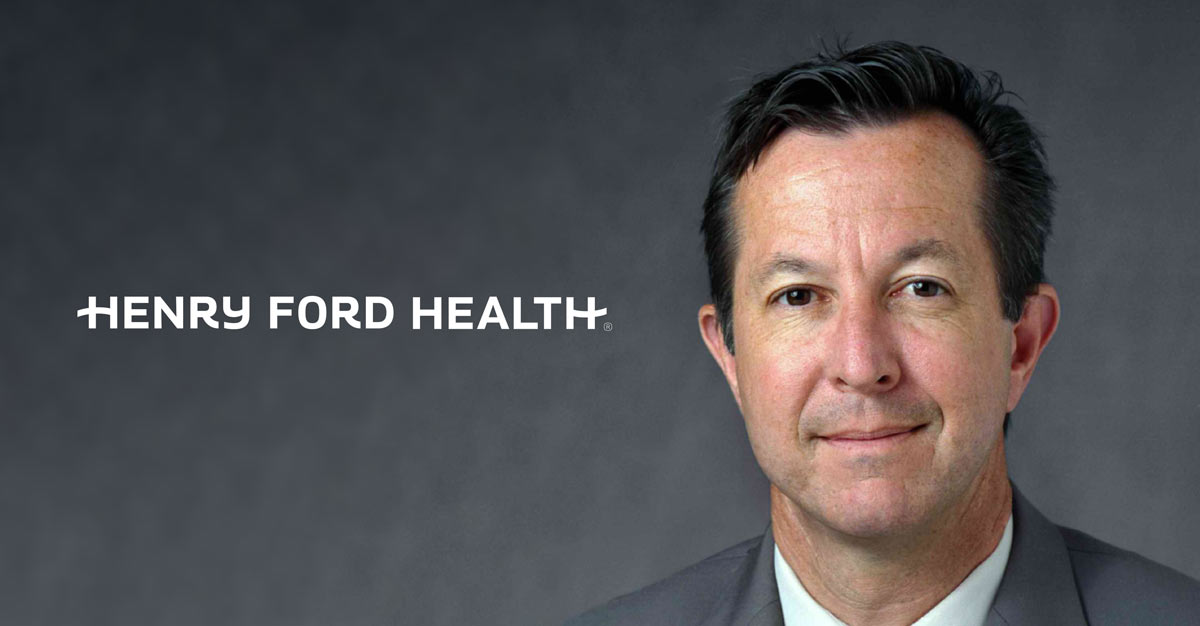
Dr. Scott Dulchavsky
Surgeon-in-Chief, Henry Ford Health, and CEO of Henry Ford Innovations
Redefining Surgical Value in the Age of Precision Medicine
At WHX Dubai, where global healthcare leaders gathered to debate the future of medicine, innovation, and artificial intelligence, one theme resonated clearly. Technology must serve value, and value must ultimately serve patients. Dr. Scott Dulchavsky, Surgeon-in-Chief and Chairman of Surgery at Henry Ford Health, and CEO of Henry Ford Innovations, represents a rare blend of surgical expertise and forward-thinking leadership. With more than a century of institutional legacy behind him, he speaks not only about advancing surgical techniques but about reshaping how large health systems think about precision, prevention, education, and community. In this conversation with HOSPITALS Magazine, Dr. Dulchavsky shares his perspective on the evolution of surgery in value-based healthcare, the real promise of artificial intelligence, the future of surgical education, and the leadership principles guiding one of America’s most innovative health systems.
From your perspective as Chairman of Surgery, how is the role of surgery evolving within modern value-based healthcare systems?
Surgery has traditionally been very procedure-oriented. In a value-based environment, we are now required to think much more broadly. We must consider whether a procedure improves long-term outcomes and reduces overall care costs. Bariatric surgery is a strong example. It is often seen as simply weight-loss surgery, but when you consider the downstream impact on diabetes, joint disease, and cardiovascular complications, the long-term value becomes clear. Preventing those chronic conditions significantly changes the cost equation.
We are also looking at preventive surgical interventions for certain cardiovascular and oncologic conditions. Surgery is no longer just an episodic treatment. It is increasingly integrated into preventive and long-term population health strategies.
At the same time, value forces us to critically assess technology. Robotics has expanded rapidly, but we must ask whether it truly improves outcomes, shortens recovery, or helps patients return to work faster. It cannot just be about adopting the newest tool. It must make measurable sense.
Artificial intelligence was a central topic at WHX. How do you see AI shaping surgery and healthcare more broadly?
AI has tremendous promise, but much of that promise is still ahead of us. We are living through an explosion of biological data combined with extraordinary growth in computational power. Some call this bioconvergence. The challenge is converting information into meaningful knowledge.
In surgery, AI has the potential to move us from probability to precision. Historically, we knew that a certain percentage of patients might benefit from a procedure. Today, we can begin asking a more powerful question. Will this specific patient benefit?
That is the essence of precision medicine. It is not about averages. It is about the individual sitting in front of you.
Beyond clinical decision-making, AI can also reduce administrative burdens. If we allow technology to handle the mundane aspects of documentation and data management, physicians can focus more on connection, compassion, and communication. That is where the true human value of medicine lies.
Henry Ford Health has long been associated with innovation. What recent advances are truly transforming patient outcomes?
Innovation has been part of Henry Ford Health’s DNA since its founding. Early in our history, experimental engineers from Ford Motor Company were embedded in the hospital. They contributed to innovations such as the hospital bed, oxygen tent, and advancements in cardiopulmonary bypass that made modern cardiac surgery possible.
Today, innovation continues across our cancer programs, cardiovascular care, orthopedics, and neurosciences. We are integrating advanced visualization technologies, including virtual and augmented reality, into both patient care and surgical planning. AI-driven personalization is another key area. By analyzing a patient’s comprehensive data, we can design individualized care plans that are far more precise than traditional protocols.
How are you preparing the next generation of surgeons for a future shaped by technology?
Education must evolve as quickly as medicine itself. I also work with NASA, where we train astronauts in medical procedures while they are far from home. We had to compress hundreds of hours of training into one or two hours. That experience shaped how I think about medical education.
At Henry Ford Health, we use virtual reality laboratories and immersive technologies to move beyond textbooks and slideshows. Every learner absorbs information differently. Some are visual, some learn through simulation, and others through discussion. We call this precision education.
We are one of the largest training programs in the United States. Our responsibility is not only to teach procedures but to prepare adaptable, technologically fluent physicians who can navigate an increasingly complex healthcare landscape.
How does Henry Ford Health balance academic research with day-to-day patient care?
Patient care always comes first. That is our primary mission. However, we are also a large learning laboratory. We serve patients across more than 500 points of care, from highly specialized tertiary programs to community-based centers.
One of our greatest strengths is diversity. Southeast Michigan is a true melting pot. We serve one of the largest Arabic populations outside the Middle East, alongside Japanese, Chinese, African American, and many other communities. This diversity allows us to study treatments and innovations across varied genetic and cultural backgrounds.
Understanding how therapies perform across diverse populations helps us deliver care that is more universally effective.
Looking ahead, where do you see the biggest opportunities for large hospital systems?
There are two major transformations on the horizon. First, the practical integration of AI into daily workflows. If we allow technology to operate at the top of its capability, clinicians can operate at the top of theirs. That means more time with patients and less time at a keyboard. Second, the evolution of computational power. As our datasets expand, we will require more advanced computing, potentially even quantum computing, to truly analyze and personalize care at the individual level. Turning vast information into actionable knowledge will define the next era of healthcare.
What leadership principles guide you as Chairman of Surgery?
One of the most important lessons I learned was in kindergarten. Close your mouth and open your ears. Leadership begins with listening. Everyone is doing their best. My role is to understand what they are trying to accomplish and help them succeed. In large surgical departments, alignment and trust matter more than authority.
What advice would you give healthcare leaders seeking meaningful and lasting impact?
It is easy to focus only on what must be done today or this quarter. Those tasks are important. But transformational change requires long-term vision. I often think about our founder, Henry Ford, and innovators like Thomas Edison. They were not thinking about incremental improvement. They were thinking about replacing the horse with the automobile, about redefining how the world functioned.
Healthcare leaders must think beyond immediate returns and invest in systems that may take years to mature but will fundamentally improve care.
Finally, why should patients consider Henry Ford Health?
Community is one of our greatest strengths. When patients come to Henry Ford Health, they find people who understand them culturally and personally. We also strive to do things for the right reasons. Not simply for financial return, but because they improve care. Finally, we are proud of the number of first-in-human procedures and advanced programs we perform across transplant, cancer, neuroscience, and cardiovascular services. At Henry Ford Health, innovations that others are still envisioning are often part of our everyday practice. Perhaps we do not always talk about that enough. We simply focus on doing the work well.