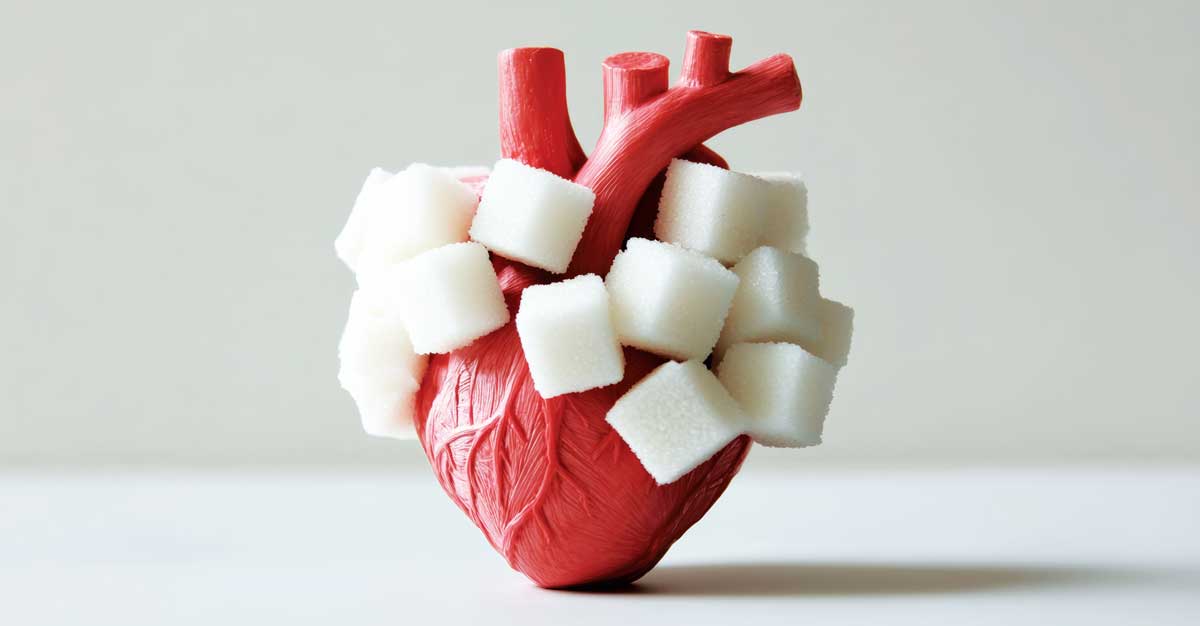
Diabetes significantly increases the risk of developing heart failure through multiple interconnected mechanisms, most notably chronic hyperglycemia, insulin resistance, and accelerated atherosclerosis. Statistics indicate that people with diabetes are two to five times more likely to develop heart failure than non-diabetic individuals. This relationship is also bidirectional, as heart failure itself can further impair the body’s ability to regulate blood glucose levels.
When blood glucose remains elevated over prolonged periods, the heart begins to fundamentally alter its metabolic strategy. Instead of relying primarily on glucose as its main energy source, the myocardium becomes almost entirely dependent on fatty acids. This inefficient process consumes large amounts of oxygen and produces harmful chemical byproducts, leading to lipotoxicity.
This metabolic shift leads to the accumulation of advanced glycation end products, or AGEs, which act like molecular glue between collagen fibers in the heart. As a result, the myocardium gradually loses its natural elasticity. The cardiac walls become thick and stiff, preventing the chambers from filling properly between beats. This condition is known as diastolic heart failure, in which the heart can still pump blood but cannot adequately relax to receive a new volume of blood.

Diabetes does not limit its damage to the heart muscle alone. It also disrupts the heart’s microenvironment. Chronic hyperglycemia destroys the inner lining of the small blood vessels that supply the myocardium with oxygen and nutrients. This microvascular damage means that cardiac cells suffer a silent, persistent supply deficit, even when the major coronary arteries remain completely open. Diabetes also damages autonomic nerves regulating heart rate and contractility, a condition known as autonomic neuropathy. The impaired heart rate response to activity strains the already weakened myocardium, accelerating heart failure.
Diabetic Cardiomyopathy: Direct Weakening of the Heart Muscle
This condition results from a cascade of complex biological changes. Chronic hyperglycemia triggers oxidative stress and leads to the accumulation of toxic glycation products that cause progressive stiffening and fibrosis of cardiac tissue. These structural changes render the heart muscle less flexible and impair its ability to relax and fill, a phenomenon known as diastolic dysfunction. Continued reliance on fatty acids over glucose leads to toxic lipid accumulation inside muscle cells, gradually weakening contractile capacity and potentially reducing pumping efficiency or causing heart failure, even without classic coronary artery disease. Preventing this decline requires a therapeutic strategy that goes far beyond simply lowering blood glucose numbers. It demands precise control of blood pressure and cholesterol in order to reduce the mechanical burden on the already injured myocardium.
Clinical studies have shown that adherence to a healthy diet and regular aerobic exercise helps improve cardiac flexibility. At the same time, a new class of medications, SGLT2 inhibitors, has emerged as a revolutionary therapeutic option. These agents provide direct protection to the heart and help eliminate excess fluid. They significantly reduce the likelihood of symptoms such as shortness of breath and peripheral edema, while improving long-term quality of life.
Microvascular and Autonomic Damage: The Hidden Assault
The impact of diabetes extends far beyond the large coronary arteries. It targets the microscopic vascular network that nourishes the heart, a process known as microvascular dysfunction. Chronic hyperglycemia damages the lining of tiny capillaries, leading to narrowing or complete obstruction. This deprives myocardial cells of a steady supply of oxygen and nutrients, placing them in a state of constant cellular starvation. Over time, these stressed cells begin to die and are replaced by non-functional fibrotic tissue. This weakens the heart’s elasticity and pumping capacity. Patients begin to experience shortness of breath and fatigue even with minimal exertion, because oxygen is no longer delivered to cardiac tissue at the required speed and efficiency.
In parallel with vascular injury, diabetes attacks the autonomic nervous system that regulates heart rhythm, a condition known as diabetic cardiac autonomic neuropathy. Under normal circumstances, the heart receives immediate neural signals to increase its rate during physical activity or stress. When these nerves are damaged, the heart becomes functionally isolated and loses its ability to respond flexibly to physiological demands. This may lead to an abnormally fixed heart rate or an inappropriate acceleration at rest.
More dangerously, this neuropathic damage can result in silent myocardial infarctions. The patient may lose the ability to feel warning chest pain, which delays medical intervention and significantly increases the risk of severe, unanticipated cardiac complications.

Modern Therapeutic Directions
Fortunately, medicine has made remarkable progress in this field. Several modern drug classes are now available that no longer serve merely to lower blood glucose, but have become essential pillars in protecting the heart and reducing the likelihood of heart failure. Controlling blood pressure and cholesterol is just as important as controlling glucose for preserving cardiac health.
In recent years, treatment strategies for diabetic cardiomyopathy have undergone a fundamental transformation. The focus has shifted from managing laboratory values to comprehensive organ protection. Among the most important breakthroughs are SGLT2 inhibitors, which are no longer viewed simply as glucose-lowering drugs but as true cardioprotective agents.
These medications work through unique mechanisms. They reduce intracardiac pressure by eliminating excess sodium and fluids through the kidneys, improve myocardial energy efficiency, and decrease inflammation and fibrosis within cardiac tissue. These combined effects have demonstrated a powerful ability to reduce heart failure hospitalizations by up to 30%. This has led major international medical societies to place them at the core of treatment guidelines for diabetic patients who have, or are at risk of, heart failure. Beyond pharmacological advances, modern medicine emphasizes that protecting the heart requires integrated management of all risk factors simultaneously. Blood pressure and cholesterol control, particularly reduction of harmful lipids, is a fundamental complement to glucose regulation.
The synergy between hyperglycemia and hypertension creates a destructive environment for the microvasculature. Achieving blood pressure targets below 130/80 mmHg and using statins to lower cholesterol help preserve arterial flexibility and prevent plaque accumulation, which increases the burden on the already-stressed myocardium.
Modern approaches also include structured cardiac rehabilitation programs based on anti-inflammatory nutrition and supervised physical activity. These programs help improve endothelial function, which is the health of the inner lining of blood vessels, restore part of the heart’s lost efficiency, and ensure a longer and better quality of life for patients.
From Metabolic Control to Comprehensive Cardiac Protection
The relationship between diabetes and heart failure is no longer viewed as an inevitable complication but as a dynamic and preventable process. What was once a strategy focused solely on controlling blood sugar has evolved into a comprehensive, organ-protective approach that addresses metabolism, vascular health, neural regulation, and myocardial function as a unified system.
Today, the real success in managing diabetic heart disease lies not only in improving laboratory values, but in preserving the heart itself and protecting the patient’s future.
As a guiding principle for modern medicine: “The true victory over diabetes is not measured by numbers on a report, but by the years of healthy life it preserves for the heart.”