Investing in Health: Building Stronger Economies and Sustainable Healthcare
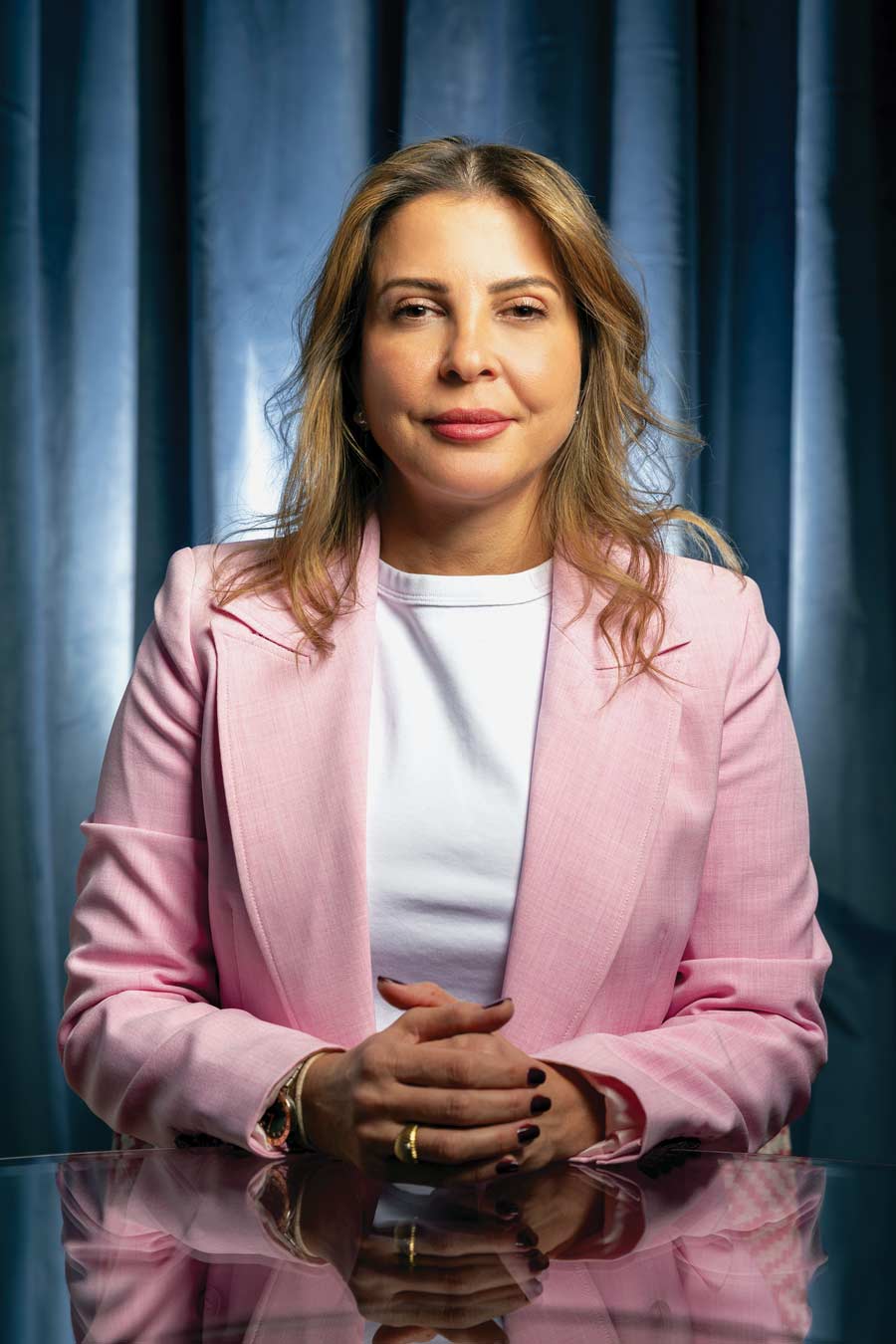
As non-communicable diseases place growing pressure on healthcare systems, workforces, and national economies, investing in health is increasingly becoming an economic and development priority. In this interview, Dr. Olfat Berro, Area Head, Middle East at Roche, discusses the economic value of prevention and innovation, the burden of chronic diseases such as diabetes, and the policies and partnerships needed to build more resilient and sustainable healthcare systems across the Middle East.
Why should health investment be viewed as an economic and development priority, rather than simply a healthcare expense?
Strong economies are built by healthy, productive populations. Yet, aging demographics and rising chronic diseases put pressure on not just healthcare systems, but entire societies. Amidst inflation and geopolitical uncertainty, governments face increasingly difficult choices about where to allocate capital. This makes the way we view health innovation critical. It is not simply a healthcare cost, but a form of national infrastructure that underpins economic resilience and long-term fiscal stability. When disease limits independence, its macroeconomic impact is profound: global productivity losses due to poor health reduce GDP by up to 15% each year1.
With 17 million people dying prematurely from non-communicable diseases annually2, we must shift healthcare from being seen as a cost center to a proactive investment in human capital. In fact, every unit invested in health is estimated to return two to four times its value in the broader economy. To build sustainable systems, we must leverage science and innovation. Innovative treatments reduce reliance on costly, recurring hospital care, preventing costs from simply being pushed into the future. This keeps people economically active for longer, unlocking the potential of the “silver economy.” When older adults maintain their health and independence, they continue to contribute their expertise to the workforce, support their communities, and drive economic consumption, rather than shifting into early dependency. Ultimately, investing in health means doing what patients need next, giving people more time with loved ones while securing a prosperous, sustainable future.
How do non-communicable diseases, particularly diabetes, affect productivity, workforce participation and national economies across the region?
Non-communicable diseases are already creating a human, societal, and economic burden across the Middle East. They account for approximately 74% of deaths in the region, with cardiovascular disease responsible for an estimated 1.4 million deaths annually and diabetes contributing to approximately 796,000 deaths3. Globally, chronic diseases are projected to cost the world economy more than US$47 trillion by 20304.
This burden is particularly disruptive for a region with an economically active population. Diabetes is a prime example. When the disease is left unchecked, it frequently leads to severe, vision-threatening microvascular complications like Diabetic Macular Edema (DME). Crucially, roughly 50% of these DME patients fall between 40 and 60 years of age. When the disease strikes during this peak period of economic activity, it can disrupt workforce productivity, household stability, and corporate leadership.
Furthermore, these diseases create a severe “caregiver double-drain”. Because treatments often temporarily blur vision, an active caregiver must take time off work to drive the patient to frequent, regular clinic appointments. This not only multiplies lost working hours for both individuals but often disproportionately affects female workforce participation, placing sustained strain on household incomes and broader public resources.
The financial scale of this is undeniable. In Saudi Arabia alone, the annual economic burden of diabetes-related visual impairment stands at a staggering SAR 150.3 billion5 (US$40.1 billion), reflecting both direct medication costs and massive productivity losses. This is why the burden of NCDs is fundamentally an economic challenge, reinforcing the importance of acting earlier to keep people independent and contributing to society for longer.
What investments in non-communicable diseases prevention and care can deliver the greatest economic and societal returns for GCC countries?
It starts with prevention and awareness, but it also means investing in systematic screening, earlier diagnosis, and ensuring patients can move efficiently from identification to appropriate care. For conditions that progress silently, waiting until symptoms appear often means irreversible damage has already occurred. There is a strong economic case for acting earlier: across the GCC, every US$1 invested in addressing non-communicable diseases could generate approximately US$4.90 in return, while averting around 290,000 premature deaths6.
Innovation plays a crucial role. For example, deploying decentralized, AI-driven screening systems within Primary Healthcare Centers can help expand screening capacity, identify at-risk patients earlier, and make better use of limited specialist capacity. But this technology only delivers its full value when embedded within connected care pathways that seamlessly link primary care, diagnostics, specialists, and long-term support.
Real-world evidence is equally important. It helps us understand how disease presents in the Middle East, where patients might be lost along the pathway and whether interventions are delivering expected outcomes in clinical settings. Strengthening local evidence generation informs better policy, supports effective resource allocation, and shapes care models directly relevant to regional patient realities.
Finally, we must reduce the logistical burden that care itself places on systems and patients. Going back to the diabetic retinopathy example, when high-frequency treatments lead to severe non-adherence and clinical bottlenecks, health systems must transition to durable, extended-interval therapeutics for diabetic eye complications. By actively integrating long-acting therapies and shifting toward value-based payment models that reward visual preservation, we can secure better outcomes over time while safeguarding hospital capacity and healthcare sustainability.
What policy changes and partnerships are needed to make health investment a central part of the region’s economic development agenda?
It starts with recognizing that health and economic development are deeply interconnected. Strong economies are built by healthy populations, so health investment must be explicitly woven into national development planning, such as Saudi Vision 2030 and the Health Sector Transformation Program (HSTP), rather than viewed merely as healthcare expenditure.
This requires creating environments that incentivize the next generation of life-changing innovations. Governments and healthcare systems must recognize the broader value of these medicines deliver. Evidence is at the heart of this. We need to measure the total economic burden of disease and leverage initiatives like the WifOR Institute Socioeconomic Data Project in the UAE, which explicitly measures the direct macroeconomic returns of clinical interventions on the workforce and families.
Transforming healthcare cannot fall to the health sector alone. It requires shared responsibility across government, finance, business, academia, and industry. Partnership is fundamental. Our role goes beyond bringing innovation to patients; it involves working alongside health systems to address inefficiencies and create sustainable access.
This means moving beyond traditional transactional models to true Public-Private Partnerships (PPPs). By co-developing risk-sharing agreements and value-based payment models, governments and industry can ensure that financial rewards are tied directly to preserved health outcomes, like maintained visual acuity or reduced hospitalization, thereby mitigating risk for public payers.
Across the Middle East, there is significant momentum around healthcare transformation. The opportunity now is to build on it, creating resilient systems that deliver better outcomes for patients while generating undeniable value for regional economies.
REFERENCES
1. McKinsey Global Institute. Prioritizing Health: A Prescription for Prosperity. July 2020
2. https://www.who.int/news-room/fact-sheets/detail/noncommunicable-diseases#:~:text=Noncommunicable%20diseases%20(NCDs)%20kill%2041,%2D%20and%20middle%2Dincome%20countries.
3. https://www.atlanticcouncil.org/blogs/menasource/the-middle-easts-greatest-killer-is-not-what-you-think/
4. https://www3.weforum.org/docs/WEF_Harvard_HE_GlobalEconomicBurdenNonCommunicableDiseases_2011.pdf
5. https://doi.org/10.1186/s13561-026-00721-3
6. https://www.atlanticcouncil.org/blogs/menasource/the-middle-easts-greatest-killer-is-not-what-you-think/