Neonatal Intensive Care
How Innovation Is Improving Survival & Shaping the Future of Newborn Medicine
Neonatal medicine has undergone unprecedented progress over recent decades, transforming the survival prospects of infants who, until relatively recently, faced life-threatening complications from the very first moments after birth. Advances in resuscitation, respiratory support, continuous monitoring, and specialized care protocols have significantly improved survival rates, while reducing long-term complications and enhancing quality of life.
Neonatal Intensive Care Units (NICUs) are among the most highly specialized departments within hospitals. They provide advanced care for premature infants, newborns with low birth weight, and babies affected by congenital conditions or respiratory, cardiac, or neurological disorders that require close observation and intensive treatment.
These units are no longer simply places where critically ill newborns receive treatment. They have evolved into fully integrated care environments that bring together advanced medical technologies, digital systems, and multidisciplinary teams, all working to give newborns the best possible opportunity for growth, recovery, and healthy development from the very beginning of life. As innovation continues across artificial intelligence, medical imaging, respiratory technologies, and precision medicine, NICUs are entering a new era of personalized, data-driven care. Continuous analysis and intelligent monitoring are enabling earlier intervention and helping clinicians prevent complications before they occur.
Every Second Counts: Specialized Care from the First Moments of Life
The intensive care journey begins immediately after the birth of an infant requiring urgent medical intervention, whether due to prematurity, extremely low birth weight, birth asphyxia, congenital abnormalities, or respiratory or cardiac disorders.
During this critical period, a fully integrated medical team, including neonatologists, resuscitation specialists, nurses, respiratory therapists, clinical pharmacists, and nutrition specialists, works to stabilize the newborn from the very first minutes of life.
Care is guided by precise, evidence-based protocols aligned with the latest international recommendations. These begin with an assessment of vital functions and securing the airway, followed by stabilization of the circulation and the development of a treatment plan tailored to the needs of each infant.
Advanced neonatal resuscitation programs, particularly the Neonatal Resuscitation Program (NRP), have contributed to standardizing clinical practice and improving the competence of medical teams, with a positive impact on neonatal outcomes worldwide.
The importance of early intervention extends beyond saving the newborn’s life. It also protects the brain and other vital organs from damage caused by oxygen deprivation or circulatory instability.
The first hours after birth are often referred to as the “golden hour,” a decisive period that can largely determine the infant’s clinical course over the days and weeks that follow. Rapid response and precise decision-making are therefore among the most important factors influencing treatment success.
Smart Incubators: Recreating the Protective Environment of the Womb
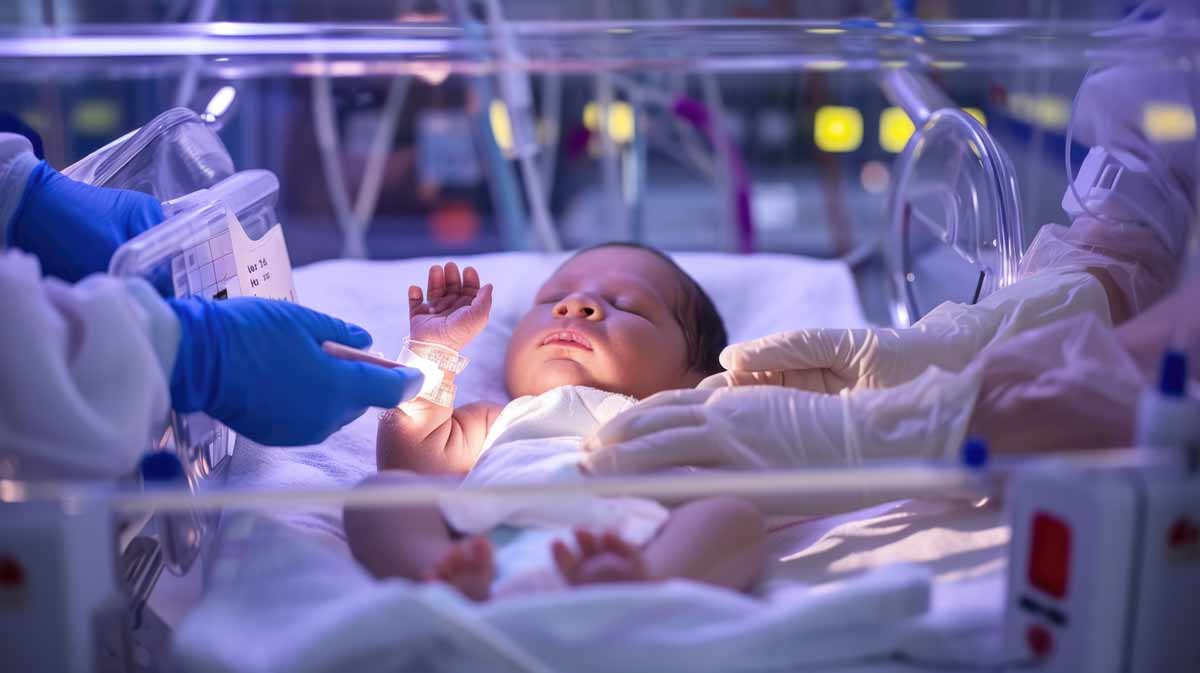
Modern incubators are a cornerstone of neonatal intensive care. They provide a stable environment that allows premature infants to continue developing under conditions designed to replicate, as closely as possible, the protective setting of the womb.
By maintaining appropriate temperature and humidity levels, incubators reduce fluid and energy loss. This limits the infant’s expenditure of vital resources and allows more energy to be directed toward growth and development.
Incubator technology has advanced considerably in recent years. Modern systems are equipped with intelligent electronic controls that automatically regulate temperature, humidity, and oxygen concentration.
They are also directly connected to central monitoring platforms and electronic medical records, allowing vital signs to be continuously observed and automatically documented. This enhances the precision of care while reducing the likelihood of errors.
Manufacturers are also paying greater attention to environmental factors that influence neurological development, including lighting, noise, and vibration. As a result, many modern incubators now incorporate noise-reduction systems and adjustable lighting, helping to create a calmer environment that supports natural sleep and healthy brain development, particularly among extremely premature infants. Incubators are also designed to allow medical teams to access the infant without exposing the newborn to sudden temperature fluctuations or increasing the risk of infection. At the same time, they enable parents to participate in selected aspects of care within a safe environment, strengthening family bonding and supporting the newborn’s emotional and psychological development.
Advanced Respiratory Support: A Lifeline for Premature Infants
The respiratory system is among the most vulnerable in infants born before the lungs have fully matured. A deficiency of surfactant, the substance that helps keep the air sacs open, makes it difficult for the alveoli to expand and can lead to respiratory distress syndrome—one of the most common reasons premature infants are admitted to the NICU.
Respiratory support is no longer limited to conventional mechanical ventilation. It now includes a broad range of advanced technologies, allowing clinicians to select the most appropriate therapy for each infant. These options include:
- Nasal continuous positive airway pressure (CPAP).
- High-flow nasal cannula therapy.
- High-frequency oscillatory ventilation (HFOV).
- Volume-targeted ventilation systems that regulate the volume of air delivered to the lungs.
These technologies help reduce the risk of chronic lung injury and improve clinical outcomes. Early administration of surfactant therapy has also significantly improved survival among premature infants and reduced the need for prolonged mechanical ventilation.
More advanced interventions, including inhaled nitric oxide for pulmonary hypertension and extracorporeal membrane oxygenation (ECMO), may be used in critically ill infants who do not respond to conventional treatments.
In recent years, NICUs have increasingly adopted gentler ventilation strategies designed to minimize lung injury caused by excessive pressure or overventilation.
The choice of respiratory support depends on gestational age, birth weight, and disease severity. Whenever possible, clinicians aim to avoid intubation and prioritize non-invasive techniques, which have demonstrated the ability to improve clinical outcomes and reduce long-term complications.
Intelligent Monitoring: How Technology and AI Are Transforming NICU Care
Continuous monitoring of vital signs is one of the most important foundations of neonatal intensive care, as a newborn’s clinical condition can change rapidly within minutes.
Modern NICUs therefore rely on advanced systems that monitor heart rate, respiratory rate, blood pressure, body temperature, and oxygen saturation in real time, while generating immediate alerts whenever an abnormal change requires medical attention.
These systems do more than display information. They can integrate data from multiple devices and analyze it continuously, giving the medical team a comprehensive view of the infant’s condition and supporting faster, more accurate clinical decisions. All information is also automatically recorded in the electronic medical record, making it easier to follow the progression of the condition and assess the response to treatment. Artificial intelligence is also beginning to play an increasingly important role in neonatal intensive care. Advanced algorithms can continuously analyze thousands of physiological data points with the aim of detecting early signs of complications such as sepsis, apnea, or circulatory deterioration before clear clinical symptoms emerge. Over the coming years, this approach is expected to strengthen clinical decision support, improve response times, and reduce complications associated with critical illness.
Point-of-Care Ultrasound: Faster Answers, Safer Decisions
Point-of-care ultrasound (POCUS) has brought a major shift to neonatal care by enabling clinicians to assess many medical conditions without transferring the infant outside the intensive care unit.
Avoiding unnecessary transport reduces the risk of clinical instability during movement, particularly in critically ill or extremely premature newborns. Physicians use POCUS to evaluate cardiac function, detect fluid accumulation around the lungs, diagnose pneumothorax, and assess blood flow.
It is also used to examine the brain through the fontanelle, allowing clinicians to detect intraventricular hemorrhage or disturbances in cerebral perfusion, both of which are common complications among extremely premature infants. Improvements in image quality and the ease of using portable ultrasound devices have made this technology an essential part of daily practice in many NICUs.
POCUS accelerates diagnosis, guides therapeutic procedures, and reduces the need for radiological examinations that may expose the infant to additional radiation.
Precision Nutrition: Building the Foundation for Healthy Growth
Nutrition is one of the most important factors influencing the growth, neurological development, and immune function of premature infants. It is therefore given particular attention in neonatal intensive care.
The medical team carefully calculates nutritional requirements according to gestational age, weight, and clinical condition, while continually adjusting the feeding plan as the infant’s health evolves.
Breast milk remains the preferred source of nutrition because it provides a balanced combination of nutrients, immune factors, enzymes, and growth factors that support maturation of the gastrointestinal system and strengthen resistance to infection.
Studies have also shown that breast milk significantly reduces the risk of necrotizing enterocolitis, one of the most serious complications affecting premature infants.
When an infant is unable to receive the mother’s own milk directly, many hospitals use human milk banks. These facilities provide donated human milk that has been screened and pasteurized according to international standards designed to ensure safety and quality.
Specialized human milk fortifiers may also be added to increase protein, mineral, and vitamin content in line with the higher nutritional requirements of low-birth-weight infants. When the infant cannot receive nutrition through the gastrointestinal tract, total parenteral nutrition is used. This provides amino acids, fats, vitamins, and minerals directly into the bloodstream until the digestive system is capable of functioning normally.
Preventing Infection: Protecting the Most Vulnerable Patients
Newborns, particularly premature infants, have immature immune systems, making them especially vulnerable to healthcare-associated infections. For this reason, infection prevention is a major quality standard in neonatal intensive care. Strict protocols include:
- Rigorous hand hygiene.
- Proper sterilization of medical equipment.
- Safe insertion techniques for intravenous catheters and breathing tubes.
- Continuous monitoring of infection rates.
Many hospitals also use advanced air-filtration systems and environmental controls within the unit, alongside carefully implemented isolation procedures when needed, to reduce the transmission of microorganisms between patients. At the same time, antimicrobial stewardship has become an essential component of infection prevention strategies.
Specialized programs aim to ensure that the right antibiotic is prescribed at the right dose and for the shortest appropriate duration.
This helps limit the emergence of antibiotic-resistant bacteria and preserves the effectiveness of available treatments.
Family-Centered Care: Parents as Essential Partners in Recovery
Family-centered care has become a core principle of modern neonatal intensive care, reflecting growing recognition of the important role parents play throughout the infant’s treatment journey.
Many hospitals now involve families in selected aspects of daily care, including breastfeeding support, basic infant care, and participation in treatment decisions after the medical condition has been clearly explained.
This approach not only strengthens family bonding, but also supports the psychological well-being of parents and reduces the anxiety and stress associated with having a newborn in intensive care. It also helps parents develop the skills they will need to care for the infant after discharge from hospital. For this reason, many NICUs provide specialized psychological and social support services, alongside educational programs covering basic resuscitation, breastfeeding, home care, and the warning signs that require medical attention. These initiatives help ensure continuity of care and support the best possible long-term health outcomes.