Robotic Surgery in the Age of Artificial Intelligence
The Future of Safer, More Precise Surgical Procedures
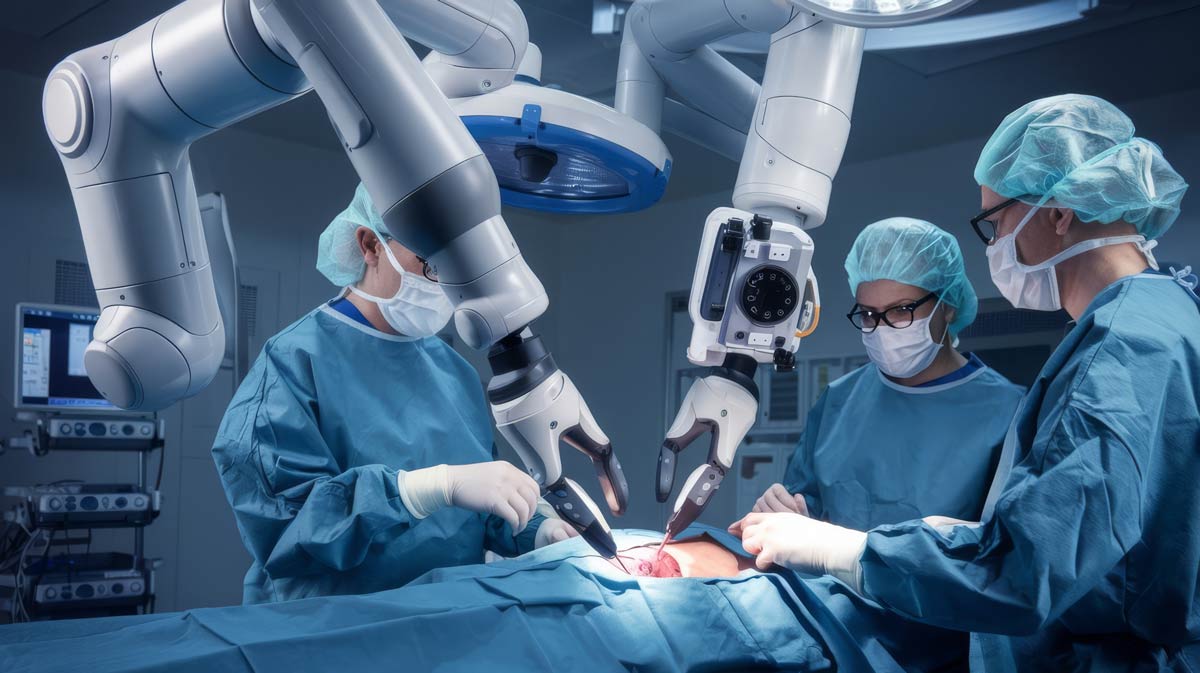
Over the past decade, robotic surgery has evolved rapidly to become one of the most transformative innovations in modern healthcare. By enabling surgeons to perform highly complex procedures with greater precision, control, and efficiency, robotic platforms have significantly advanced surgical care. With the integration of artificial intelligence (AI), the field is now entering a new era, one that combines the expertise of surgeons with the advanced analytical capabilities of intelligent systems. Today, robotic surgical platforms are no longer limited to executing highly precise movements under a surgeon’s control. Increasingly, they are supporting preoperative planning, enhancing intraoperative navigation, and delivering real-time insights that assist clinical decision-making, ultimately improving procedural safety and patient outcomes.
The Evolution of Robotic Surgery
Robotic surgical systems were originally developed to overcome some of the limitations associated with conventional laparoscopic surgery. These platforms offer surgeons several key advantages, including:
- High-definition, three-dimensional visualization.
- Highly articulated surgical instruments with exceptional dexterity.
- Elimination of natural hand tremor.
- Improved surgeon ergonomics during lengthy procedures.
- Enhanced access to anatomically complex regions.
Today, robotic surgery is widely utilized across numerous surgical specialties, including:
- Urology
- Obstetrics and gynecology
- General surgery
- Colorectal surgery
- Thoracic surgery
- Cardiac surgery
- Head and neck surgery
- Orthopedic surgery
With the incorporation of artificial intelligence, these systems have evolved beyond mechanical precision to provide intelligent, data-driven surgical support.
AI-Enhanced Surgical Precision
One of the most significant contributions of artificial intelligence to robotic surgery lies in its ability to enhance surgical precision.
By leveraging machine learning algorithms and analyzing vast volumes of medical imaging and clinical data, AI-powered systems can accurately identify critical anatomical structures; including blood vessels, nerves, tumors, and surrounding vital tissues.
These capabilities improve tissue recognition during surgery, facilitate precise identification of key anatomical landmarks, distinguish healthy from diseased tissue, and reduce the risk of injury to adjacent vital structures. AI also supports more accurate tumor excision, ultimately contributing to improved surgical and clinical outcomes.
In oncologic surgery in particular, these technologies enable surgeons to achieve precise surgical margins while preserving as much healthy tissue as possible, leading to better therapeutic outcomes and improved postoperative quality of life.
Intelligent Surgical Navigation
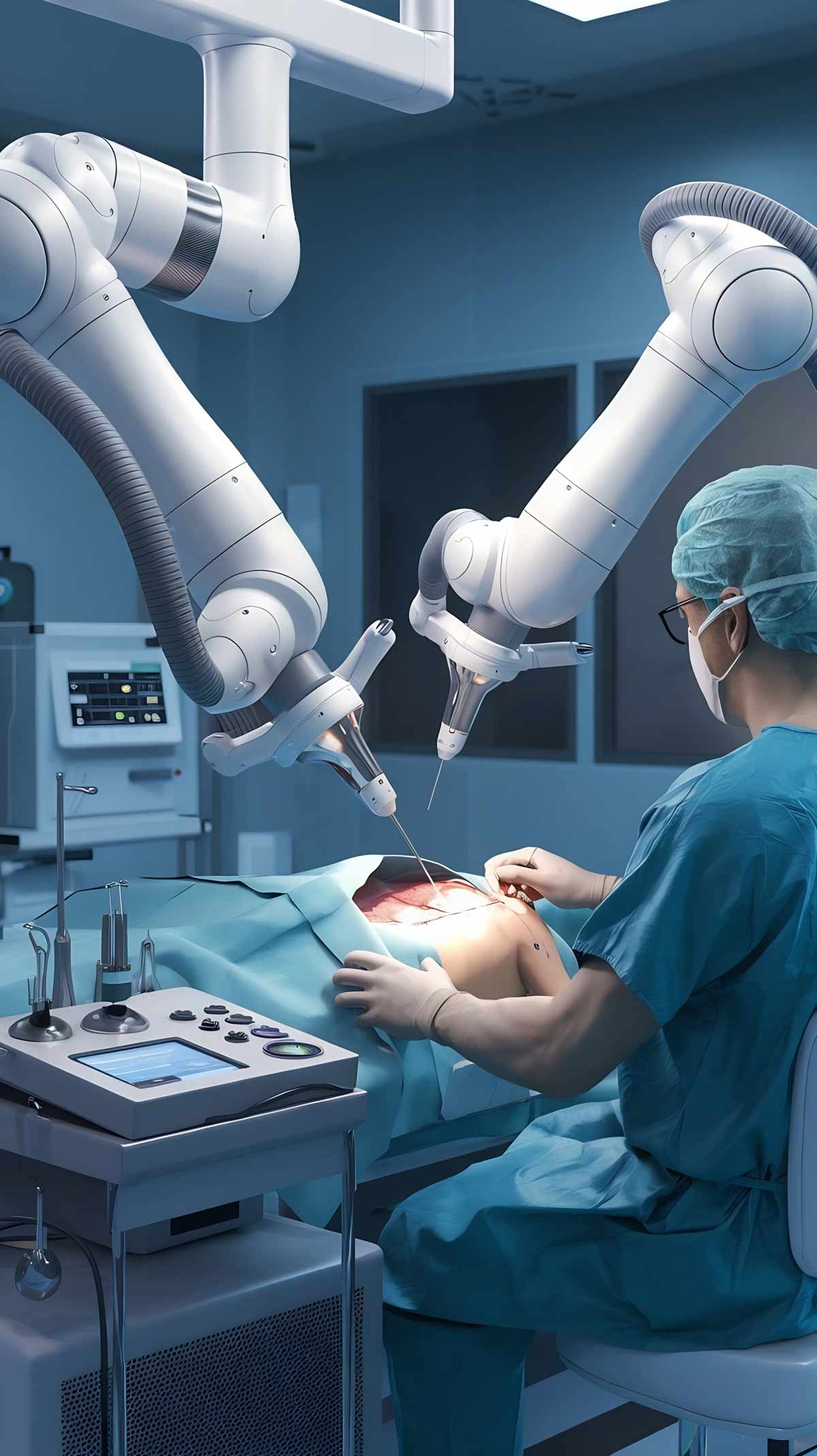
Surgical navigation is another area that has advanced considerably through artificial intelligence and sophisticated medical imaging technologies. Before surgery, AI-powered systems analyze multiple imaging modalities; including computed tomography (CT), magnetic resonance imaging (MRI), positron emission tomography (PET), and ultrasound; to generate highly detailed three-dimensional anatomical models. These models facilitate comprehensive preoperative planning and help surgeons determine the safest and most effective pathway to the target anatomy. The resulting patient-specific 3D reconstructions enable surgeons to develop more accurate and personalized surgical plans. During surgery, AI-enabled navigation systems provide:
- Real-time tracking of surgical instruments.
- Continuous comparison between intraoperative progress and preoperative imaging.
- Dynamic adaptation to tissue changes during the procedure.
- Ongoing visual guidance for the surgeon.
- Alerts when surgical instruments approach critical anatomical structures.
Computer Vision and Augmented Reality
Computer vision has emerged as one of the most advanced applications of artificial intelligence in robotic surgery. Using AI algorithms, these systems analyze live surgical images and video streams to accurately identify blood vessels, nerves, tumors, lymph nodes, and other essential anatomical landmarks. When combined with augmented reality (AR), these capabilities allow critical information to be projected directly into the surgeon’s field of view during the procedure. This enables visualization of otherwise hidden anatomical structures, seamless integration of radiological images with the live surgical field, improved navigation within complex anatomy, and greater precision during minimally invasive procedures. In addition, these technologies reduce surgeons’ cognitive workload, improve operative efficiency, and support more informed decision-making throughout every stage of the procedure.
Expected Benefits
The integration of robotic surgery with artificial intelligence offers numerous clinical advantages, including:
Greater surgical precision.
- Reduced complication rates.
- Faster postoperative recovery.
- Improved functional outcomes.
- More personalized patient care.
The Future of Intelligent Surgery
The future of surgery is increasingly defined by the convergence of robotics, artificial intelligence, and big data, paving the way for a new generation of surgical procedures that are more precise, efficient, and personalized.
In the coming years, operating rooms are expected to witness significant advances in intelligent surgical systems, including greater autonomous assistance with routine surgical tasks, real-time tissue characterization and analysis during procedures, and AI-assisted suturing technologies.
Digital twin technology, which creates a virtual anatomical model of each individual patient; is also expected to play an increasingly important role in surgical planning, enabling surgeons to simulate procedures and predict outcomes before surgery. At the same time, more sophisticated predictive algorithms will improve the assessment of surgical risks and potential complications.
Furthermore, integration with remote patient monitoring technologies and wearable medical devices will enable more continuous and accurate monitoring before and after surgery, strengthening the delivery of personalized healthcare while improving patient safety and clinical outcomes.
AI-powered robotic surgery represents a major milestone in the evolution of modern healthcare, combining the expertise and judgment of surgeons with the analytical intelligence and decision-support capabilities of advanced technologies. By enhancing surgical precision, improving intraoperative navigation, and providing sophisticated clinical decision support, these innovations are raising standards of safety while delivering better patient outcomes. As artificial intelligence and robotic technologies continue to evolve, surgery is expected to become increasingly precise, personalized, and efficient; opening new possibilities for the treatment of complex diseases and setting new benchmarks for the future of surgical care.